Great real estate marketing starts long before the first advertisement runs.
Every successful real estate project begins with a vision, a developer's idea of what a space can become and who it can serve. But turning that vision into market success takes more than a well-timed campaign or an eye-catching brochure. It takes a genuine understanding of the project, the people it's built for, and the story that connects the two. That understanding has to start on day one, not after the building is ready and the launch date is looming.
Having worked on projects like KDMS Skywalk and 75°E Homes from Day Zero, I've seen firsthand how early involvement changes the outcome. Being part of the conversation before launch meant I could understand the developer's vision from the inside, identify who the project was truly meant for, shape a brand narrative around that insight, and build marketing strategies designed to deliver real results, not just visibility.
Looking back at both projects, one lesson stands out above the rest: successful real estate marketing isn't a campaign you run. It's a framework you build.
Here's what that framework looks like in practice.
Start With the Developer's Vision
Before a single creative concept or media plan is discussed, the real work begins with a question: what is the developer actually trying to build, and why?
Every project carries a purpose beyond square footage, a philosophy about how people should live, work, or invest. Understanding that purpose early gives every later decision a foundation to stand on. Positioning, tone of voice, even the choice of media channels all of it should trace back to this original vision. Skip this step, and marketing becomes guesswork dressed up as strategy.
Define the Right Buyer, Not Every Buyer
No project is meant for everyone, and trying to appeal to a broad, undefined audience usually means connecting with no one in particular. Instead, the goal is to build a clear picture of the ideal buyer, their lifestyle, their aspirations, how they think about investment, and how they actually make buying decisions.
This persona becomes a filter for every message that follows. When communication is built around a specific person rather than a generic "homebuyer," it feels relevant, and relevance is what draws in buyers who genuinely connect with what the project stands for.
Turn Features Into Stories
A list of specifications rarely sells a home. Buyers don't fall in love with square footage or amenity counts, they fall in love with how a space will make their life feel. Empathy-driven design takes this further see how emotional intelligence and empathy in design elevate brand experiences.
Rather than listing what a project has, the more effective approach is to show what living there feels like. That shift, from specification to experience, is what makes communication human, memorable, and emotionally resonant instead of forgettable.
Build One Consistent Brand Experience
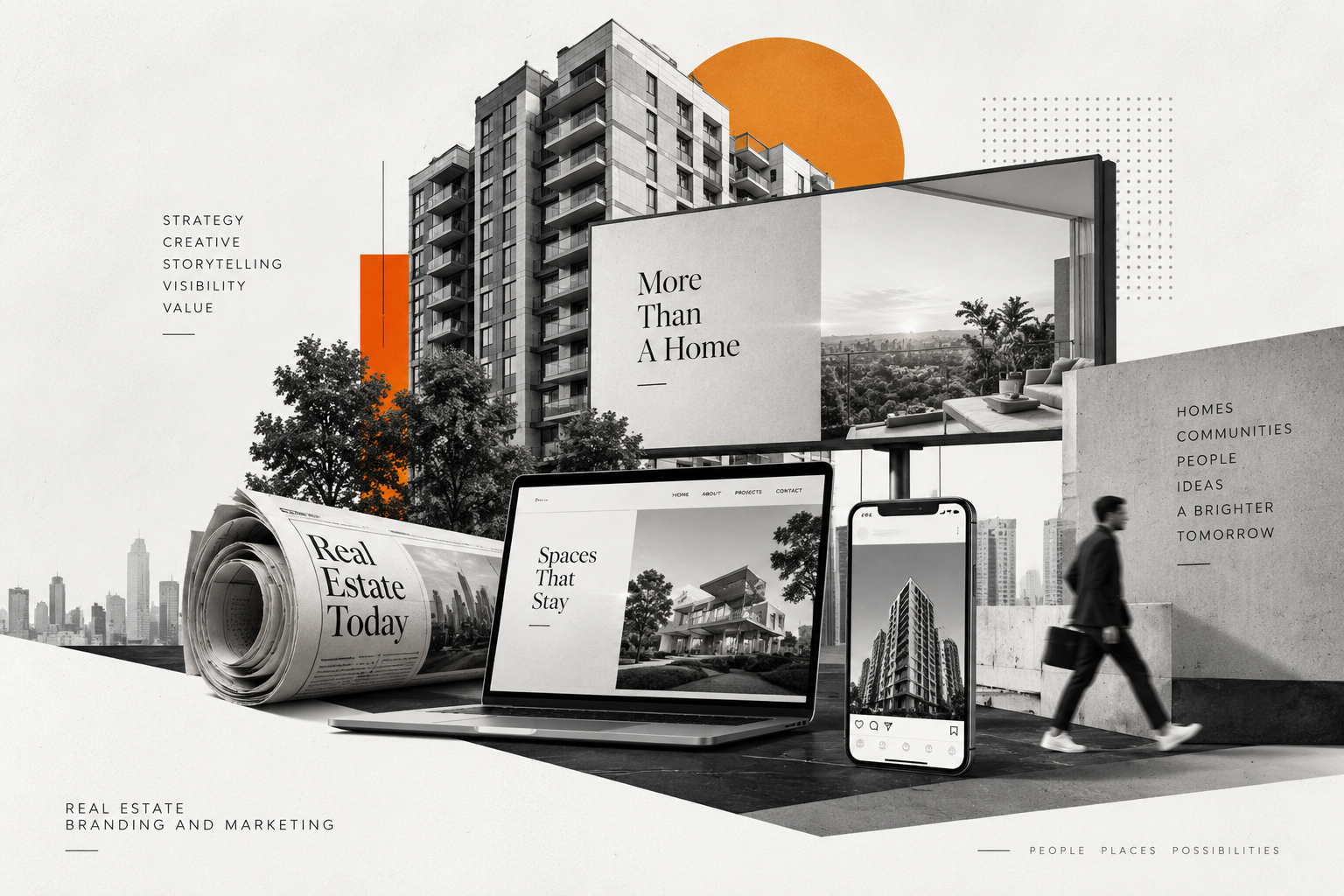
Once the positioning is set, it needs to show up everywhere the website, social media, advertisements, brochures, and even the sales presentation used in a face-to-face meeting. A prospective buyer might encounter a project a dozen different ways before ever speaking to sales, and each of those touchpoints should feel like part of the same story.
That consistency does more than look polished. It builds trust, because buyers are naturally more confident in a project that presents itself with clarity and coherence at every turn.
You may also checkout: Real Estate Project Marketing Strategies
Let Performance Marketing Work With Purpose
Performance marketing, the paid campaigns, the targeted ads, only works as well as the strategy behind it. When the audience and the message have already been clearly defined, campaigns aren't guessing who to target or what to say. They're simply reaching the right people with a message that's already been tested and refined.
The result isn't just more clicks. It's stronger engagement, better-qualified leads, and sales conversations that start from a place of genuine interest rather than curiosity.
Align Marketing With Sales
Marketing's job doesn't end the moment a lead is captured. Its real value lies in preparing that lead for the conversation that comes next. When messaging has already communicated a project's value clearly, prospects walk into sales conversations informed rather than uncertain and that makes every interaction smoother, faster, and more likely to convert.
Marketing and sales aren't separate stages of a funnel. They're two parts of the same buyer journey, and they perform far better when they're built to work together from the start. A digital strategy for real estate developers shows how to map every channel to that journey.
Why Early Collaboration Matters
Being involved from Day Zero before the first render is finished, before the brand name is finalized makes a measurable difference. It means helping shape a project's story from its very beginning, rather than constructing one after the fact to fit whatever has already been decided. That early involvement leads to sharper positioning, more effective campaigns, and a marketing strategy that authentically reflects the vision it's meant to represent.
Key Takeaways
- Marketing should begin before launch, not after.
- Understanding the developer's vision shapes every decision that follows.
- Clear buyer personas make communication sharper and more relevant.
- Storytelling builds emotional connection in a way that feature lists never can.
- Consistency across every channel builds buyer trust.
- Marketing and sales perform best when they operate as one connected effort, not two separate functions.
Final Thoughts
Projects like KDMS Skywalk and 75°E Homes reaffirmed something I keep coming back to: great real estate marketing was never about running more advertisements. It's about understanding the vision behind a project, telling the right story to the right people, and doing both with consistency from the very start.
When those pieces come together, marketing stops being a line item for visibility. It becomes a genuine growth engine, one that creates lasting impact, not just impressions.
FAQs
1. What is a real estate marketing framework?
A real estate marketing framework is a structured approach that guides property developers from project planning to sales. It includes market research, buyer persona development, branding, positioning, marketing channels, lead generation, and sales alignment to ensure a successful project launch.
2. Why is a real estate marketing framework important for property developers?
A well-defined real estate marketing framework helps developers create a clear brand position, reach the right buyers, generate qualified leads, and improve project sales. It ensures every marketing activity supports the project's long-term business goals instead of working in isolation.
3. What are the key components of a successful real estate marketing framework?
A successful real estate marketing framework typically includes:
- Market and competitor research
- Developer vision and project positioning
- Buyer persona development
- Brand messaging
- Digital marketing and lead generation
- Sales enablement
- Performance tracking and optimization
4. When should developers start marketing a real estate project?
The best time to begin marketing is during the planning stage or Day Zero. Early marketing helps define the project's positioning, create a compelling brand story, build awareness before launch, and generate qualified leads even before sales officially begin.
5. How is a real estate marketing framework different from a marketing campaign?
A marketing campaign is one activity designed to achieve a short-term objective, such as generating leads or promoting a launch. A real estate marketing framework is the overall strategy that defines positioning, branding, messaging, channels, and sales alignment throughout the project lifecycle.
6. How does branding fit into a real estate marketing framework?
Branding is one of the core elements of a real estate marketing framework. A strong brand communicates the developer's vision, differentiates the project from competitors, builds buyer trust, and creates a consistent experience across every marketing channel.
Share