


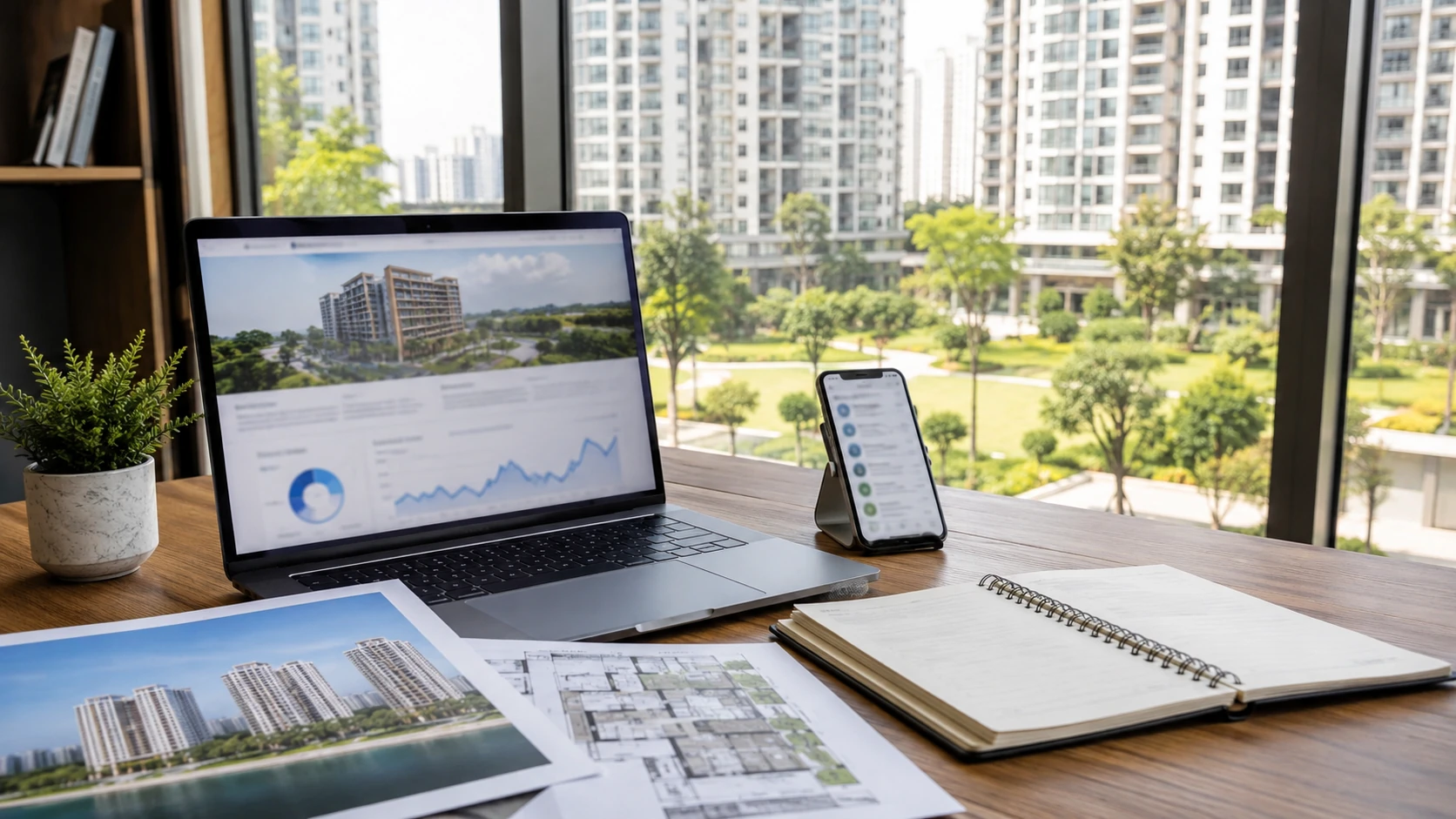
- Most home buyers now start their search on Google, not with a site visit, so a developer who isn't easy to find online is losing enquiries before the sales team ever gets a chance to talk to them.
- SEO works by making sure your project shows up when someone searches for homes in that location, that price range, or that specific need, instead of relying only on paid ads or word of mouth.
- Local SEO matters more than almost anything else for real estate, since buyers search by neighbourhood, not just by city.
- Content that actually answers a buyer's questions, price trends, connectivity, possession timelines, builds trust and keeps people on your site long enough to enquire.
- Site speed, mobile experience, and clean project pages affect both your Google ranking and whether a visitor bothers to fill out a form.
- SEO takes longer than a paid campaign to show results, but the enquiries it brings in tend to be better qualified and cost less over time.
Why Real Estate Developers Can't Ignore SEO Anymore
A few years ago, a good location and a decent brochure did most of the work. A buyer would hear about a project from a friend, drive past a hoarding, or walk into a sales office because it was nearby. That's not how most people shop for property anymore.
Today, someone thinking about buying a home in Hyderabad, Pune, or Bangalore starts with a search. They type something like "2BHK apartments in Kokapet" or "best real estate projects near ORR" before they've even shortlisted a developer. If your project doesn't show up in that search, you don't lose the sale. You never even get considered.
This is the part most developers underestimate. SEO isn't about ranking for the sake of ranking. It's about being present at the exact moment someone is actively looking for what you're selling. That's a very different job than running a billboard or a radio ad, and it needs to be treated differently, which is exactly why real estate marketing services now build SEO in as a core part of a project's launch plan rather than an afterthought.
How SEO Actually Brings In More Enquiries
1. It puts you in front of people who are already looking
Paid ads interrupt someone's scroll. SEO meets someone mid-search, when they've typed a question themselves. Someone searching "3BHK flats near Gachibowli under 1.5 crore" has already decided what they want. They just need to find who's selling it. Ranking for that kind of search means you're talking to a buyer who's further along, not a stranger who happened to see your ad.
2. It works on long-tail, specific searches
Very few people search just "flats in Hyderabad." Most searches are longer and more specific: "ready to move apartments near Financial District," "gated community with clubhouse in Narsingi," "affordable villas in Kompally with EMI options." These long-tail searches have less competition and much higher intent. A real estate SEO strategy built around these specific phrases, rather than one generic keyword, is usually what actually brings in enquiries, not just website traffic.
3. Local SEO decides whether nearby buyers find you
Real estate is a hyper-local business. A buyer looking in Kokapet isn't going to care about your project in Kompally, and Google knows this. Local SEO, meaning your Google Business Profile, location-specific pages, and locality-based content, is what determines whether you show up for buyers actually searching near your project. A developer with strong local SEO for each site they're building often gets more direct enquiries than one running city-wide ads with no local depth.
4. Helpful content builds the trust that gets someone to fill a form
Buyers don't hand over their phone number to the first website they land on. They read a few pages first, check possession dates, compare price trends, look at what's nearby. A project page or blog that actually answers these questions honestly, without vague marketing language, does more to convert a visitor than a flashy design ever will. This is also where content built around real questions, like a locality guide, a price trend update, or a straightforward FAQ, ends up ranking well and building trust at the same time.
5. A fast, clean website keeps people from leaving
Even if SEO brings someone to your site, a slow-loading page or a confusing layout will lose them before they enquire. Google also factors in page speed and mobile usability when deciding rankings, so this isn't just a user experience issue, it directly affects whether you show up in search at all. Clean project pages with clear pricing, floor plans, and an easy enquiry form matter as much as the SEO work that got someone there. Site speed and mobile usability are ranking factors too, which is why website development for real estate and SEO have to be planned together.
What This Looks Like in Practice
A developer launching a project near Narsingi, for example, needs more than one generic "apartments in Hyderabad" page. They need a page built around that specific locality, content answering what a buyer in that price band actually wants to know, and a Google Business listing that shows up when someone searches nearby. Add in a few well-written blog posts on things like connectivity updates or price trends in that corridor, and the project starts showing up in searches that a generic city-wide campaign would never reach. This kind of locality-first approach is what real estate SEO services are actually built to handle, project by project rather than city by city.
This is where working with a team that offers real estate SEO services, rather than trying to handle it in-house alongside sales and construction, tends to make a real difference. It's a slow, steady process, not something that shows results overnight, but the enquiries it generates are usually better qualified because the buyer has already read about the project before they ever call.
SEO Alone Isn't Enough, But It's the Foundation
SEO gets a project found. It doesn't replace good photography, a clear pricing structure, or a sales team that follows up quickly. It works best as part of a broader approach, alongside social media, paid campaigns, and content that tells a clear story about the project. This is exactly what real estate marketing services are meant to bring together: making sure the SEO groundwork, the content, and the paid media are all pointing in the same direction instead of working in isolation.
At Nine Degree, this is the approach we take with every developer we work with. We build SEO around the specific locality and buyer a project is meant for, rather than running the same keyword strategy across every city we work in. A launch in Kokapet and a launch in Kompally are searched for differently, priced differently, and need different content to answer the questions their buyers actually have.
Conclusion
Buyers are searching before they're calling. If a developer isn't visible in that search, the sales team never gets the chance to convert that interest into a site visit. SEO isn't a quick fix, and it won't replace a strong project or a good location. But for developers who want a steady stream of enquiries from people who are already looking to buy, rather than people who need to be convinced first, it's one of the most reliable tools available today.
Frequently Asked Questions
How long does SEO take to show results for a real estate project?
Most developers start seeing meaningful movement in three to six months, depending on how competitive the locality is and how much SEO work went in before launch. A new page competing against established developers in a hot corridor like Kokapet takes longer than one in a less competitive area. Unlike paid ads, which stop bringing enquiries once the budget stops, SEO keeps working in the background, which is why most developers treat it as a long-term investment.
Is SEO better than paid ads for real estate marketing?
They solve different problems, so it isn't really an either-or choice. Paid ads bring visibility fast, useful right after a launch when you need enquiries immediately. SEO takes longer but keeps bringing in enquiries without ongoing ad spend, and buyers who find you through search tend to be further along in their decision-making. Most developers get the best results using both together: paid ads early in a launch, with SEO building up in the background to carry enquiries once the ad budget winds down.
What kind of content actually helps a real estate project rank higher?
Content that answers questions a real buyer is actually asking, rather than content written purely to include keywords. This includes locality guides explaining what's nearby and how the area is developing, price trend updates for that specific corridor, straightforward FAQs about possession dates and approvals, and honest comparisons between project types. Buyers can tell the difference between content written to inform them and content written only to rank, and Google's algorithms have gotten better at telling the difference too.
Does local SEO really matter more than general SEO for developers?
For most real estate projects, yes. Buyers rarely search city-wide, they search by locality, proximity to work, or a specific landmark. A project ranking well for a broad term like "apartments in Hyderabad" but with no local SEO presence for its actual neighbourhood will miss most buyers close enough to visit. A proper Google Business Profile, locality-specific pages, and locally relevant content usually bring in more qualified enquiries than chasing broader keywords.
Should a developer handle SEO in-house or work with an agency?
It depends on scale and bandwidth. A developer with one project and a small team can often manage basic SEO on their own with some guidance. But developers running multiple launches across different localities usually benefit from a team offering dedicated real estate SEO services, since each project needs its own keyword research, content, and local optimisation rather than a one-size-fits-all approach. The bigger risk with handling it entirely in-house is that SEO gets deprioritised whenever sales or construction deadlines get busy, and it's a process that suffers the most from inconsistency.
Share



.png)



-p-1600.png)