The Gap Between Leads and Conversions
For most real estate brands, generating leads is no longer the primary concern. Well-optimized campaigns across digital platforms can consistently drive enquiries at scale. However, a significant portion of these leads never translate into meaningful engagement. Getting the campaign mix right in the first place matters, and real estate advertising in India: where do you start is a good place to begin.
Many potential buyers do not respond to calls from unknown numbers, while others lose interest due to delayed follow-ups or lack of relevant information. In several cases, the first interaction fails to create enough curiosity or trust to move the conversation forward.
Another underlying challenge is the mismatch between the audience and the offering. Without clearly defined communication around pricing, positioning, and product value, campaigns often attract a broader audience, many of whom may not be the right fit. This results in high lead volumes but low conversion efficiency.
Ultimately, the real gap lies not in attracting attention, but in sustaining it. And that is where most real estate marketing efforts begin to lose momentum.
Why WhatsApp is Changing the Game
WhatsApp is redefining how real estate brands connect with potential buyers by making communication more immediate, intuitive, and engaging. Unlike traditional outreach methods, it allows conversations to begin instantly often at the very moment a user expresses interest.
The platform’s strength lies in its simplicity. Messages are more likely to be opened and read, responses feel natural rather than forced, and interactions flow more like conversations than sales pitches. This shift alone significantly improves engagement levels.
Beyond text, WhatsApp enables richer communication. Brochures, images, walkthrough videos, and location details can be shared within seconds, giving buyers a clearer and more immersive understanding of the offering. At the same time, it allows them the flexibility to respond at their own pace removing pressure and building comfort.
More importantly, WhatsApp supports a structured yet personalized journey. From the first introduction to detailed information, and from follow-ups to final nudges, the entire engagement can be managed within a single, continuous thread. This consistency plays a crucial role in building trust and guiding the buyer towards a decision.
Insights from a Recent Campaign
A recent WhatsApp campaign executed for a Jaipur based real estate project offers valuable insights into how this channel performs in practice.
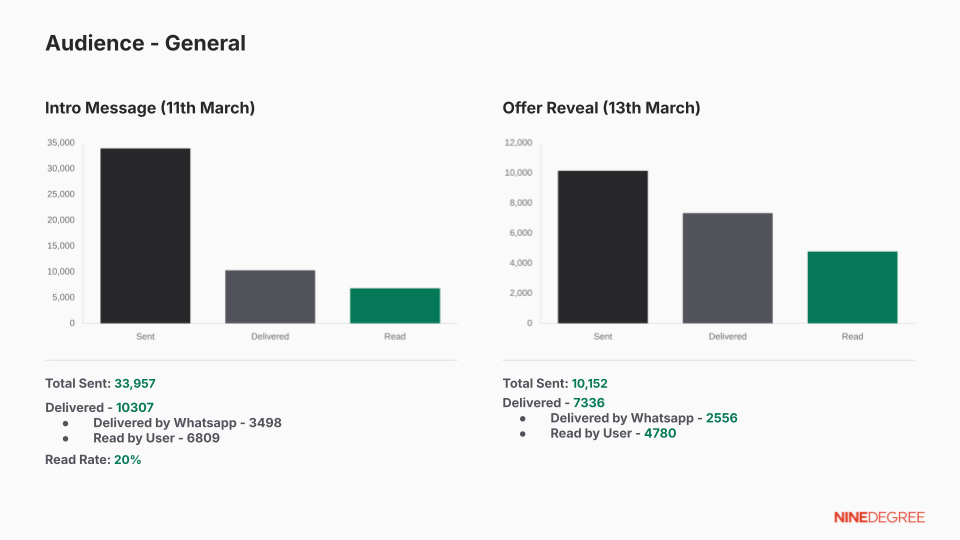
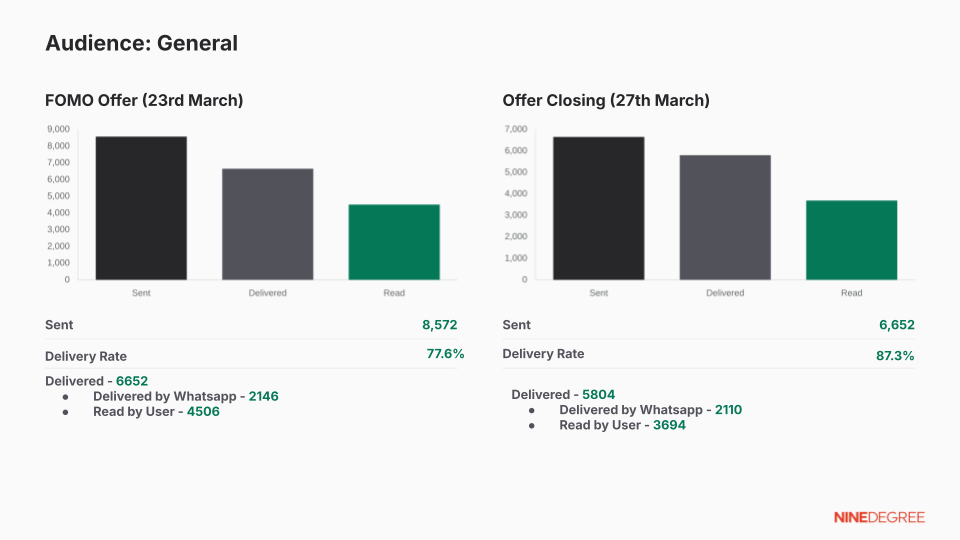
One of the most notable observations was the impact of structured communication. Rather than relying on a single outreach, the campaign followed a phased approach—beginning with an introduction, followed by detailed information, then urgency-driven messaging, and finally a closing push. Engagement improved significantly in the later stages, highlighting that user interest builds progressively, not instantly.
Another key learning was around lead quality. While the campaign generated a healthy volume of enquiries, only a small percentage translated into genuinely interested buyers. A major factor contributing to this was a mismatch between the project’s pricing and the expectations of a large segment of the audience. This reinforces an important insight: while WhatsApp can enhance engagement, the quality of outcomes depends heavily on how well the audience is defined and how clearly the offering is communicated from the outset.
Speed of response also emerged as a critical factor. Leads that were engaged quickly showed stronger interaction and a higher likelihood of moving forward. In contrast, delayed responses often led to a loss of interest. In a fast-paced digital environment, timing can directly influence conversion outcomes.
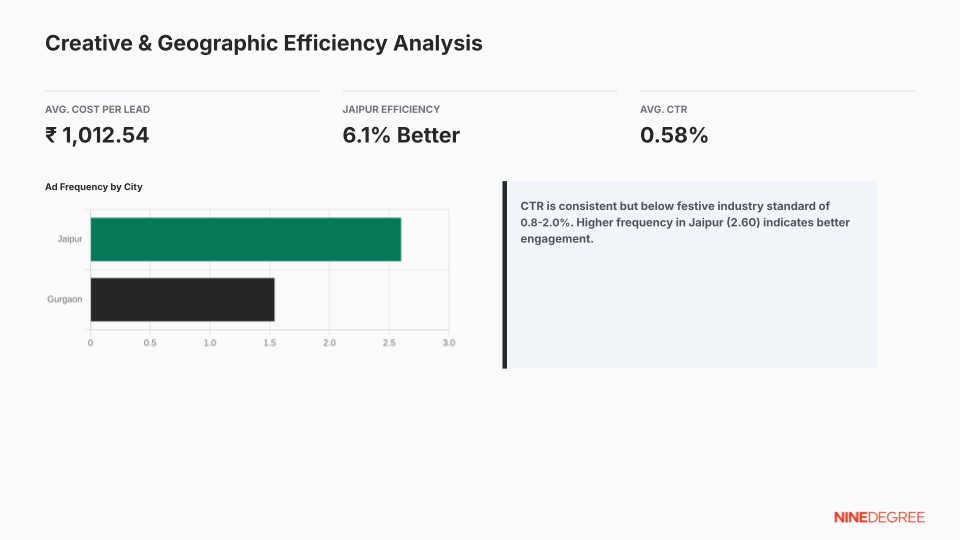
One of our most significant learnings was geographic. Jaipur outperformed Gurgaon by 85.7%, delivering 6 out of 7 leads. This wasn't luck; it was proof that understanding your local market is crucial. Jaipur buyers showed higher engagement frequency (2.60x) and better conversion potential. This insight has transformed how we allocate budgets. It's not about casting the widest net; it's about fishing in the right ponds.
Additionally, message frequency and delivery dynamics require careful attention. Over-communication or poorly segmented messaging can reduce effectiveness, while technical factors such as opt-outs and platform limitations can impact reach if not managed strategically.
How to use whatsapp for real estate marketing
WhatsApp has emerged as a critical touchpoint in real estate marketing, not just for communication, but for driving meaningful, conversion-led engagement. In a market where buyers expect speed, clarity, and personalized attention, WhatsApp offers a direct, frictionless channel to guide prospects from initial interest to final decision.
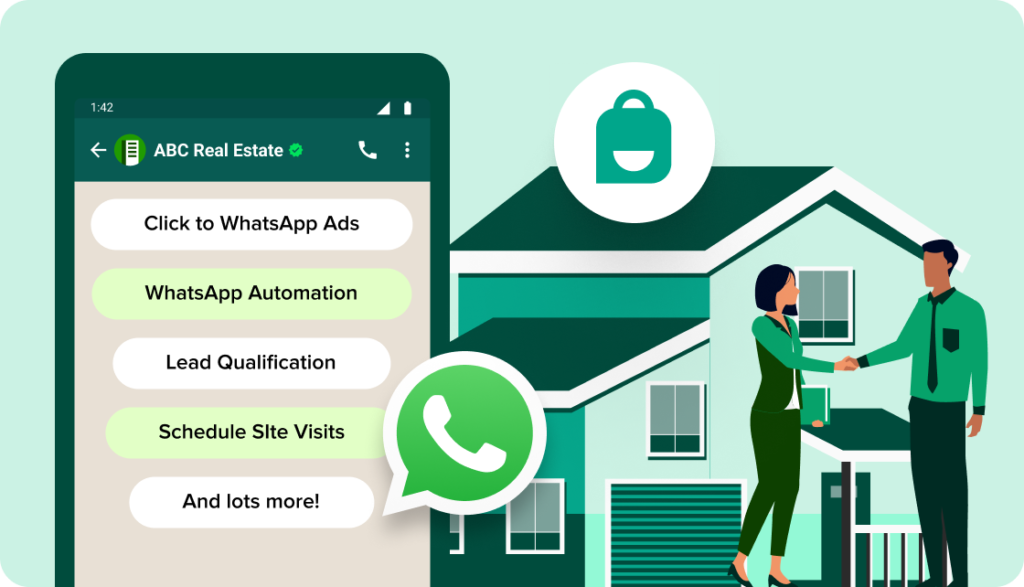
To use WhatsApp effectively, companies must treat it as a structured funnel rather than a reactive inbox. Entry points can be strategically built through click-to-WhatsApp ads, website integrations, and on-ground QR codes, ensuring that every inquiry flows into a controlled and trackable environment. Once inside, the focus should shift to delivering value instant brochures, pricing details, location advantages, and immersive virtual walkthroughs that help buyers move forward without delays. This is one pillar of how to set up a real estate conversion ecosystem that converts.
Campaigns on WhatsApp can be highly targeted and intent driven. Developers can run inventory-based campaigns highlighting limited availability, launch exclusive previews for premium audiences, or nurture prospects through curated content such as investment insights, construction updates, and neighbourhood storytelling. This not only maintains engagement but also builds trust over time - one of the 10 real estate project marketing strategies that drive sales in 2026.
Automation is where WhatsApp truly transforms scale. Through WhatsApp Business APIs, companies can deploy intelligent chat flows to qualify leads, segment them based on budget or preference, and trigger personalized responses instantly. Automated reminders for site visits, follow-ups, and post-visit communication ensure consistency without manual effort. When integrated with CRM systems, this creates a seamless loop of data, communication, and action.
Ultimately, WhatsApp enables real estate brands to move from fragmented interactions to a cohesive, high-impact buyer journey where every conversation is purposeful, timely, and conversion-focused.
Conclusion: Turning Conversations into Conversions
In real estate, timing and clarity often make the difference between a missed opportunity and a successful sale. This is where WhatsApp is quietly reshaping the conversion journey. It brings brands closer to buyers—right into the space where most real decisions and discussions already happen.
Instead of waiting on calls or delayed email responses, prospects today prefer quick, clear, and convenient communication. WhatsApp meets that expectation by enabling instant replies, easy sharing of information, and ongoing conversations that feel natural rather than transactional. From the first enquiry to scheduling a site visit and beyond, it keeps the momentum intact.
That said, simply being present on WhatsApp is not enough. The real impact comes from how thoughtfully it is used—targeting the right audience, sharing relevant information at the right time, and maintaining consistency in follow-ups without overwhelming the user.
As the market becomes more competitive, the brands that stand out will be the ones that communicate better, not just louder. WhatsApp offers that edge. It simplifies the journey, builds familiarity, and helps convert intent into action—one conversation at a time.
Share