Generative AI is helping creative teams close this gap.
Today, AI tools help brands:
- Create campaign characters
- Visualise future environments
- Enhance architectural renders
- Build project-specific lifestyle scenes
- Turn ideas into campaign-ready visuals, faster
But speed is not the biggest benefit. AI helps real estate brands tell more distinctive, consistent, and connected visual stories.
Creating a Campaign Character for FLIP
One of our recent applications of generative AI was the FLIP campaign for Nature Tulsi.

FLIP stands for Future Land Investment Plan. It was created to introduce land investment to young professionals aged 25 to 35.
This audience already understands SIPs, EMIs, subscriptions, and long-term financial planning. But buying land can still feel complicated. Many see it as a decision for "later in life."
To make the topic more relatable, we created an AI-assisted campaign character: Next Door Siddharth.
Siddharth is a young, financially aware Indian professional. He is practical and approachable. He does not sound like a broker or a financial expert. He feels like the friend or neighbour you'd trust with investment advice.
AI image generation helped define:
- His appearance and clothing
- His expressions and personality
- His surroundings
We then developed his look across multiple images and adapted him for campaign videos.
Instead of using a different stock model in every ad, FLIP got one consistent, recognisable face. Siddharth could appear in reels, digital ads, investment explainers, static creatives, presentations, and follow-up content.


AI did not just help us create a character. It helped us build a repeatable marketing asset.
Making Future Projects Easier to Imagine
AI-assisted visualisation is also changing how under-construction and plotted developments are presented.
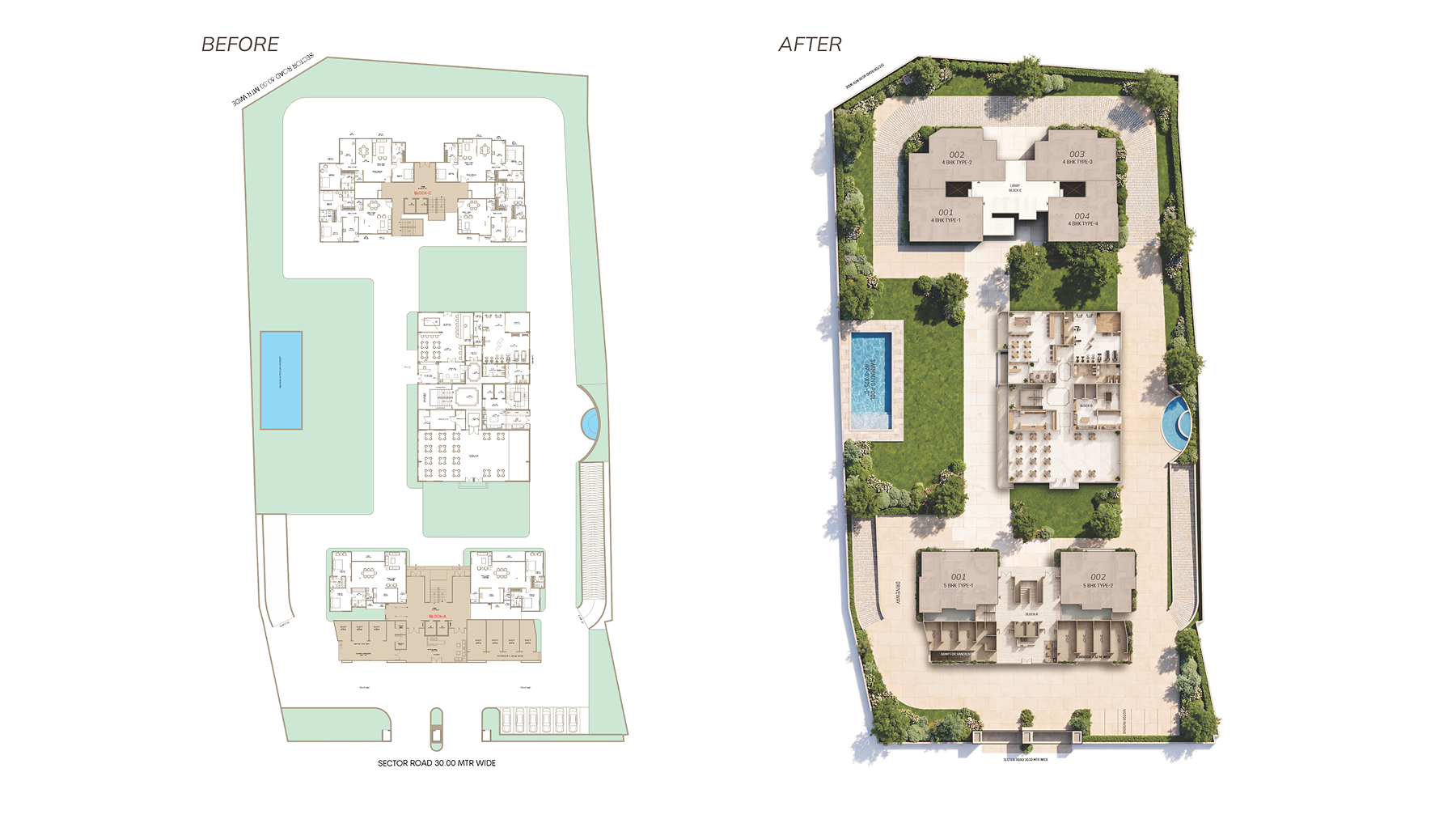
A technical master plan holds all the necessary details. But many buyers struggle to picture how the roads, green spaces, amenities, and homes will feel once complete.
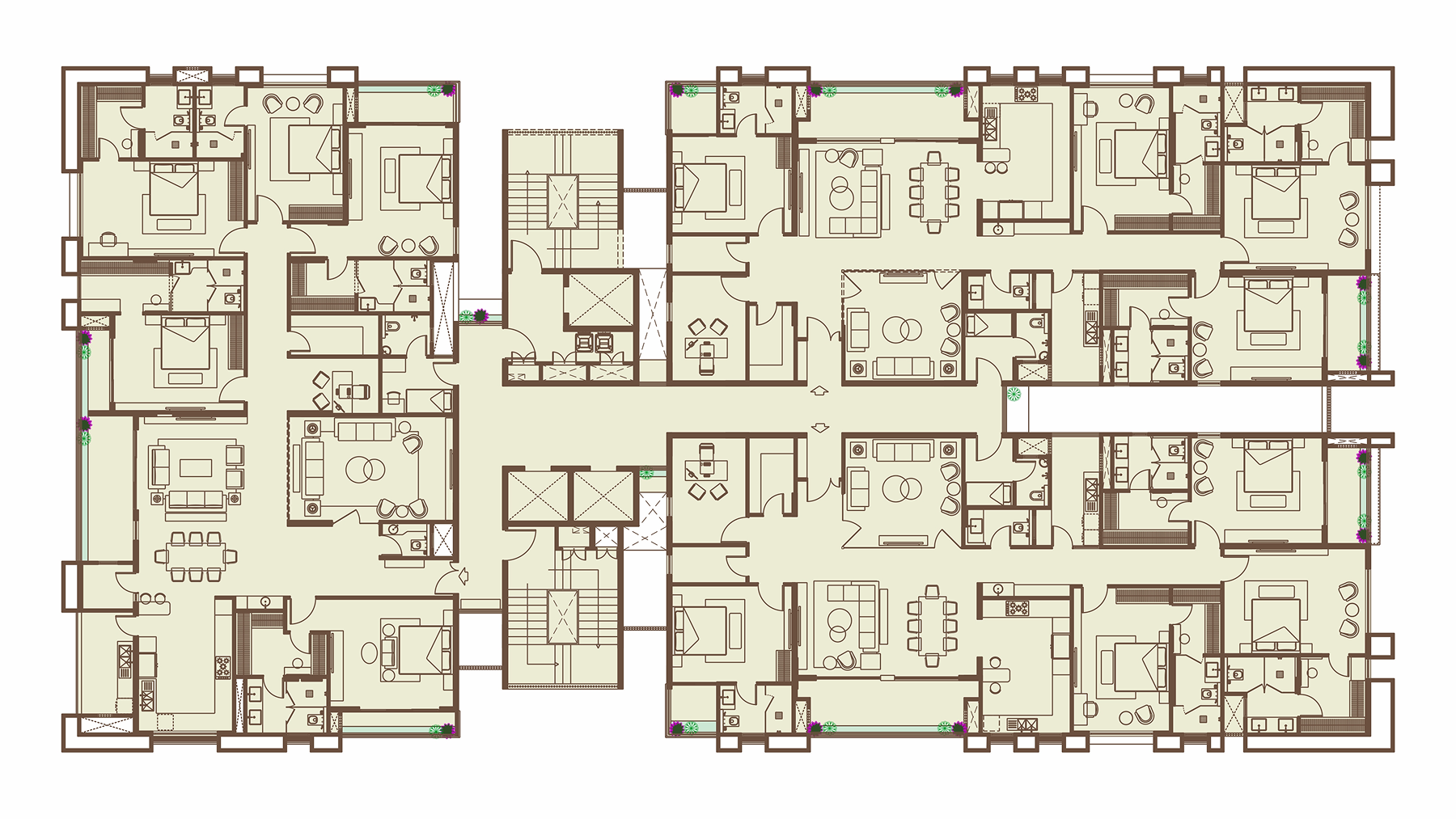
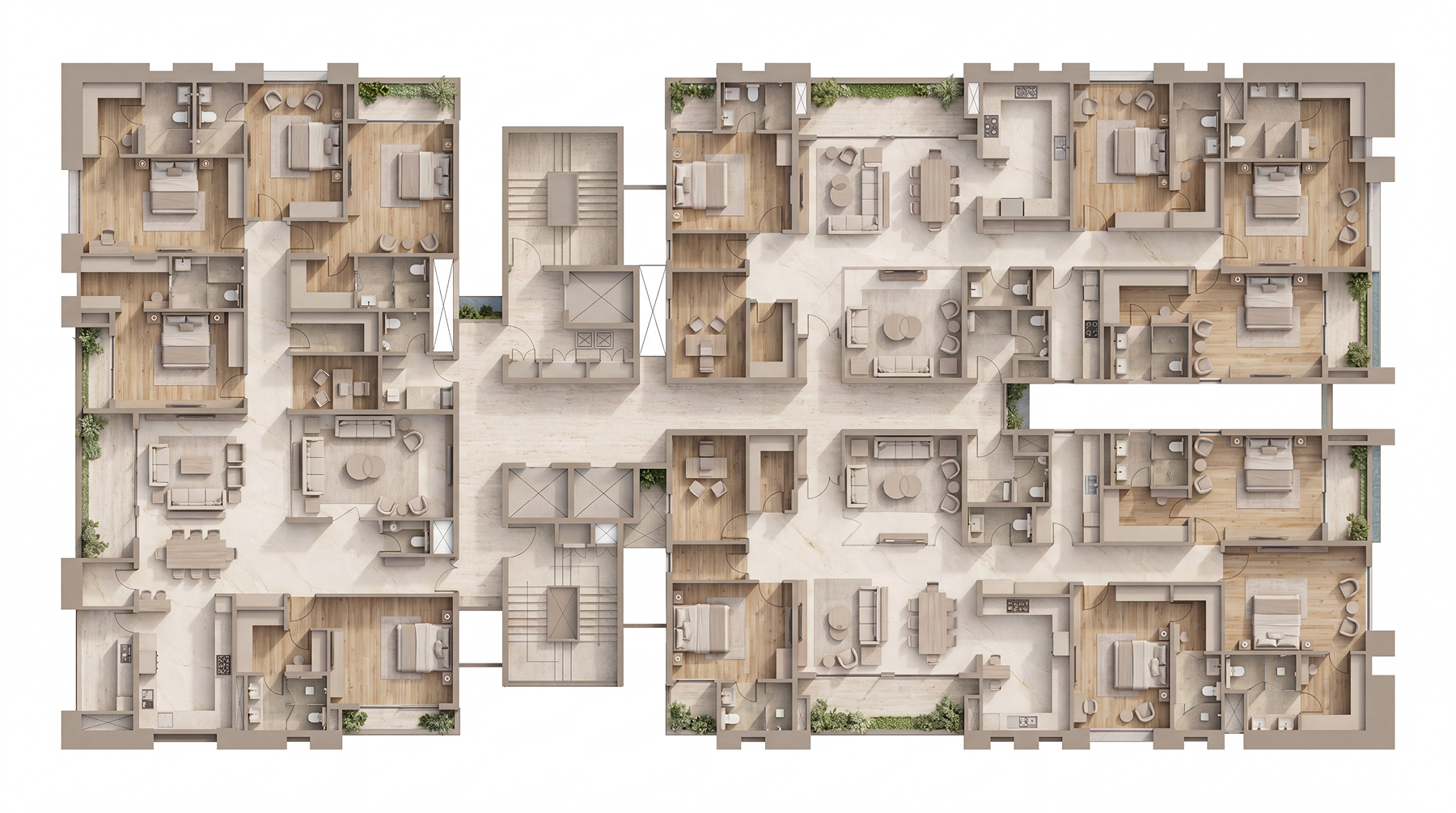
For projects like Padam Estate and New Heritage City, AI visualisation helped bring the township experience to life through:
- Premium aerial perspectives
- Planned roads and landscaped areas
- Entry gates and community spaces
- Future residential activity
- Township scale and connectivity
The goal is never to change the approved plan. It is to turn technical information into visuals that buyers can grasp instantly.
Here, AI works as a bridge between architectural planning and buyer imagination.
Developing Project-Specific Lifestyle Visuals
Real estate campaigns have long relied on stock photography for lifestyle communication.
The problem? Stock images rarely match the actual project. The architecture looks foreign. The people don't reflect the target audience. The setting feels disconnected from the campaign.
AI lets creative teams build lifestyle scenes made specifically for a project.
For KDMS Skywalk, the visuals focused on family life, community moments, children's activities, and spaces for every generation.
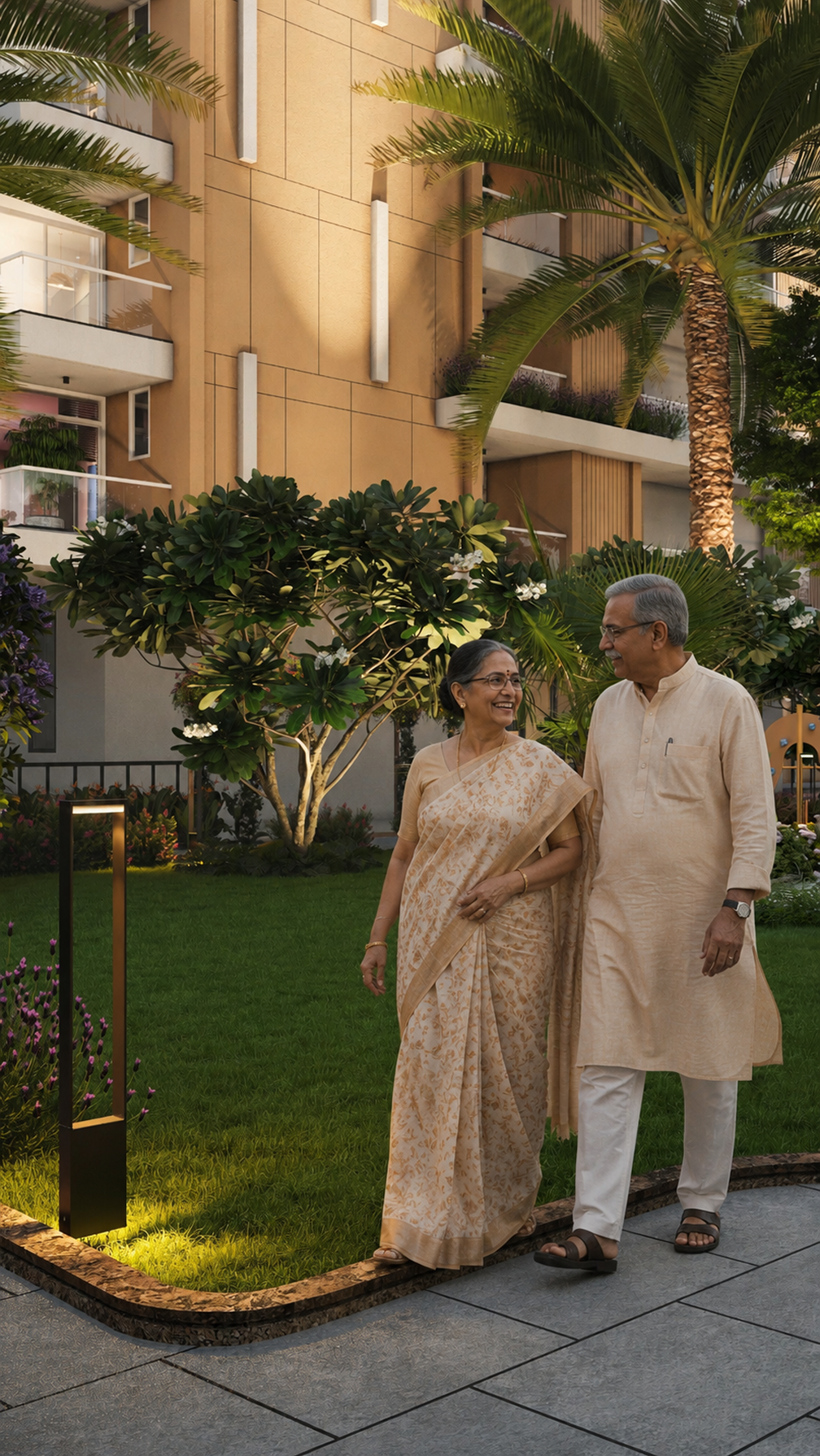
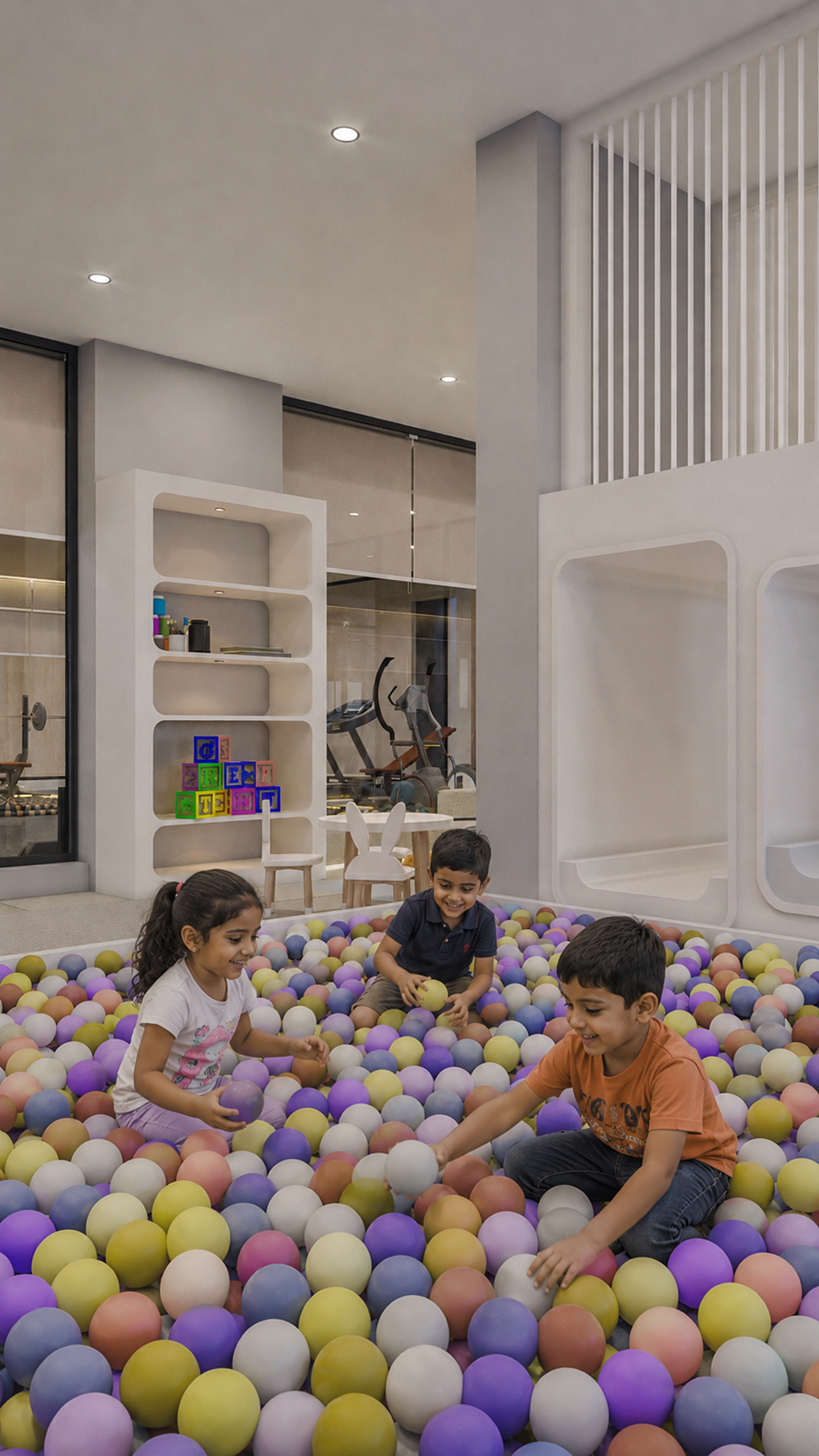
Instead of a generic stock photo of a family by a pool, AI-assisted visuals can reflect the project's actual architecture, audience, lighting, and mood.
The result feels like a real part of the project, not a borrowed stock image.
Building More Emotional Campaign Stories
Real estate communication doesn't have to focus only on features.
People also respond to feelings like peace, belonging, growth, security, and connection with nature.
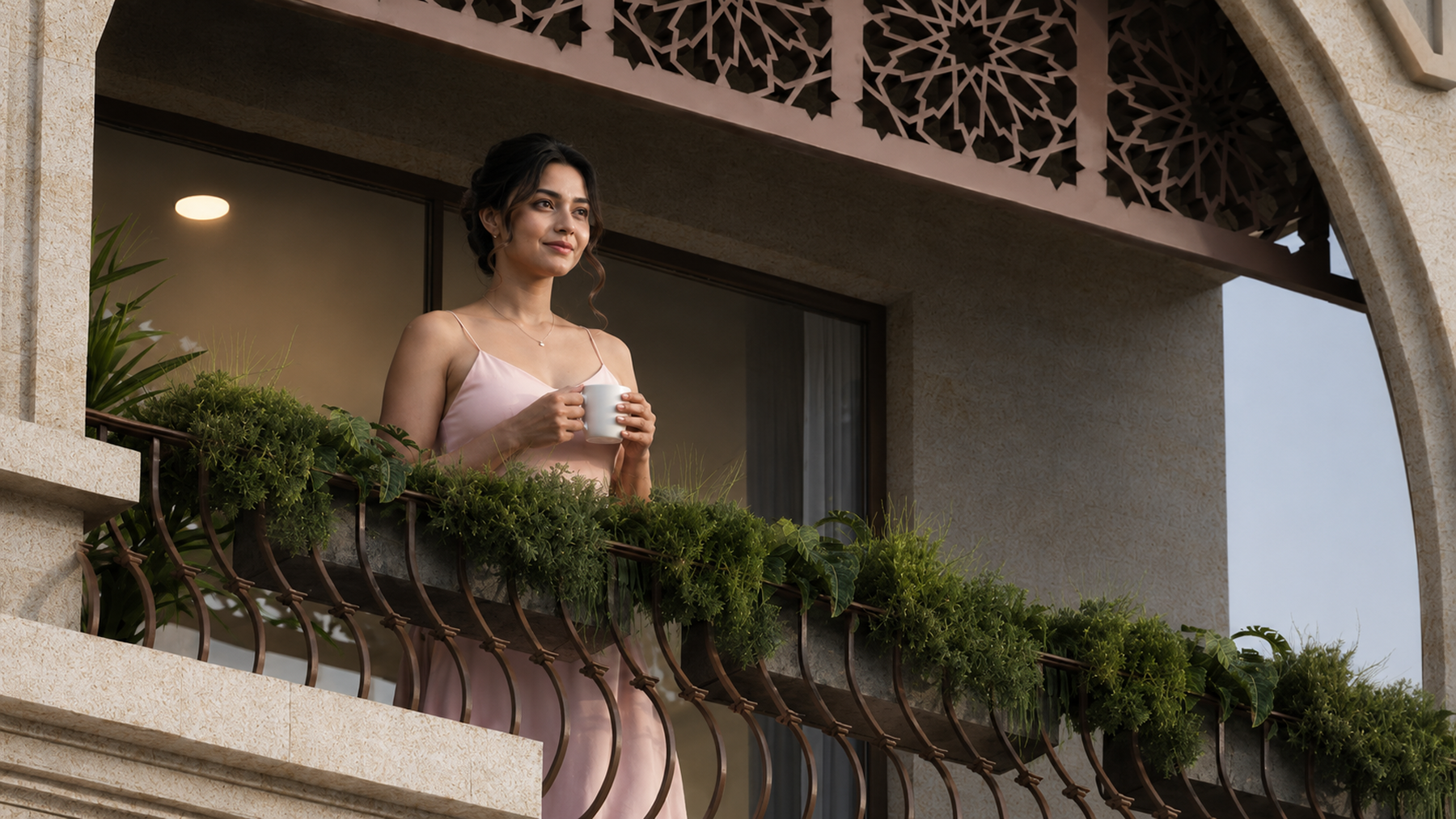
For Nature Rudraksh, the visual direction linked residential living with nature. AI helped explore cinematic scenes with greenery, water, natural light, and open spaces.
These visuals work well in brand films, social campaigns, and storytelling — where not every frame needs to sell a feature directly.
Some images explain the project. Others simply help people feel it. It is the same pull towards cinematic, emotion-first content that explains why creative ad films are replacing traditional real estate campaigns across India.
Expanding the Value of Existing Project Assets
Most developers start a campaign with a limited set of architectural renders.
The same images get reused across brochures, social posts, ads, presentations, and outdoor media. Over time, this repetition can make a campaign feel stale.
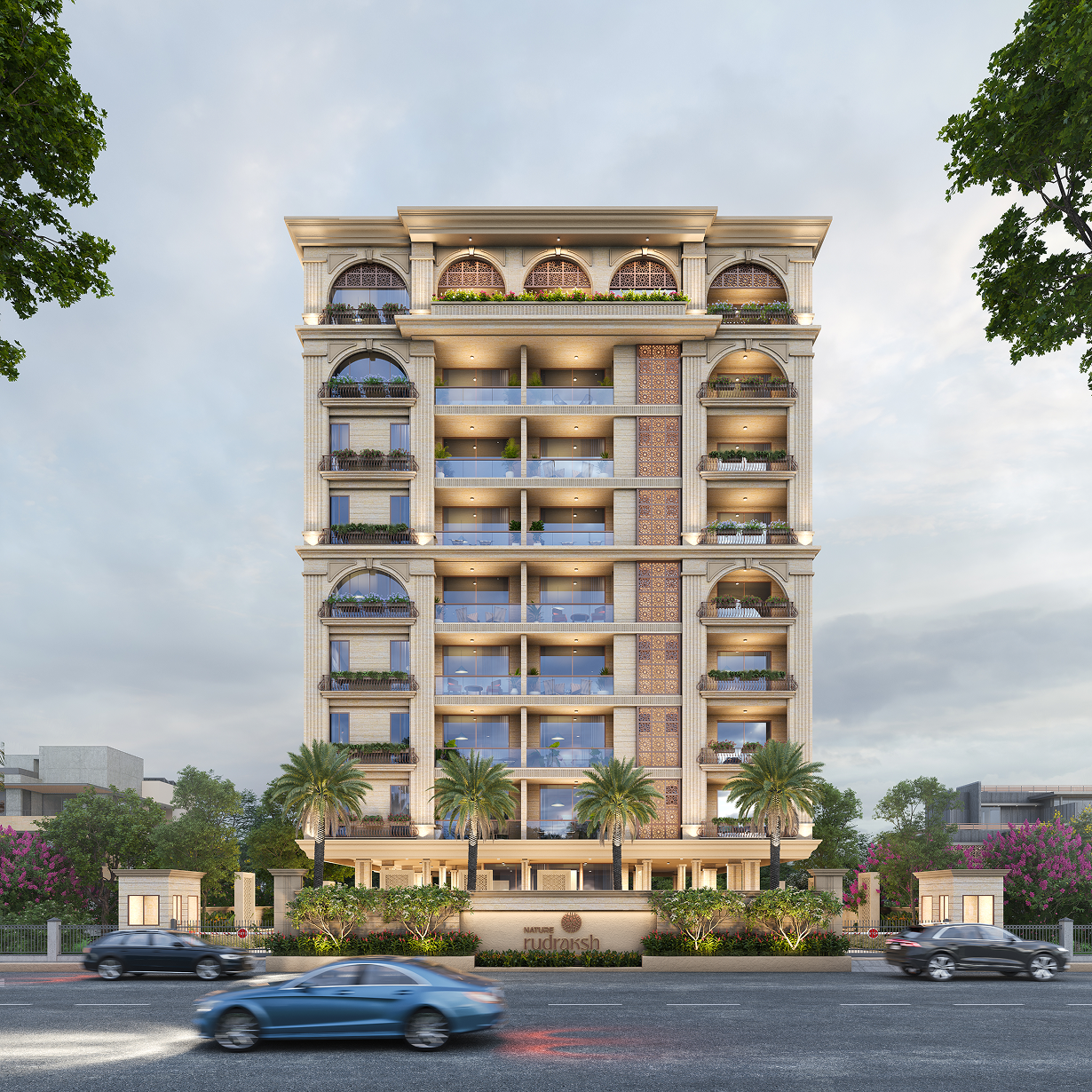
AI-assisted editing helps unlock more value from existing approved assets. A single exterior render can become:
- Day and evening versions
- Vertical formats for reels and stories
- Festival or seasonal creatives
- Location-focused ads
- Wider frames for campaign copy
- Platform-specific visual treatments
AI can also extend images — turning landscape renders into vertical formats without cropping key architectural details.
That said, the original architecture must stay protected. AI can enhance the sky, atmosphere, depth, and landscaping around an approved render. It should never add floors, change windows or balconies, alter materials, or invent amenities that don't exist.
Architectural Accuracy Still Matters
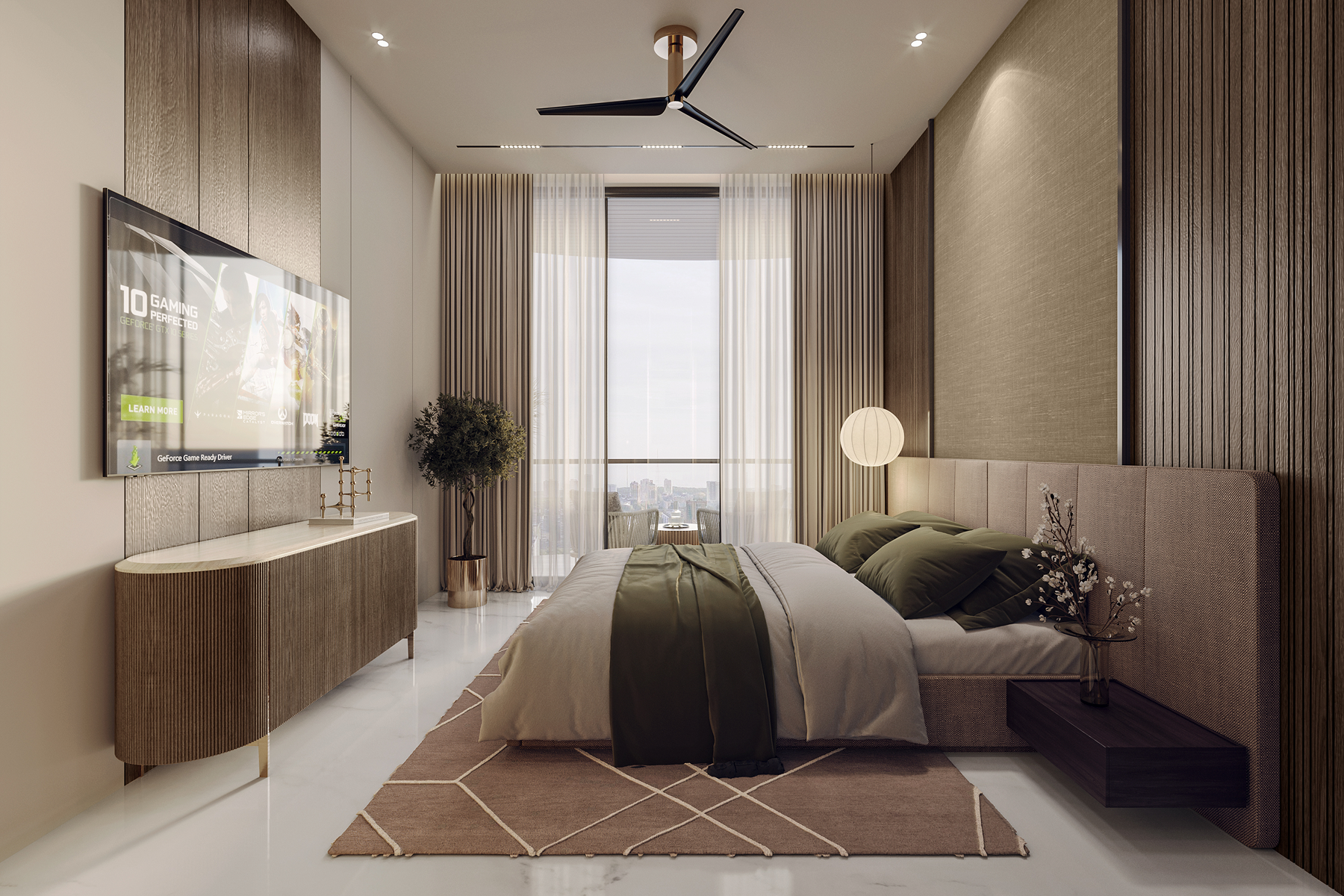
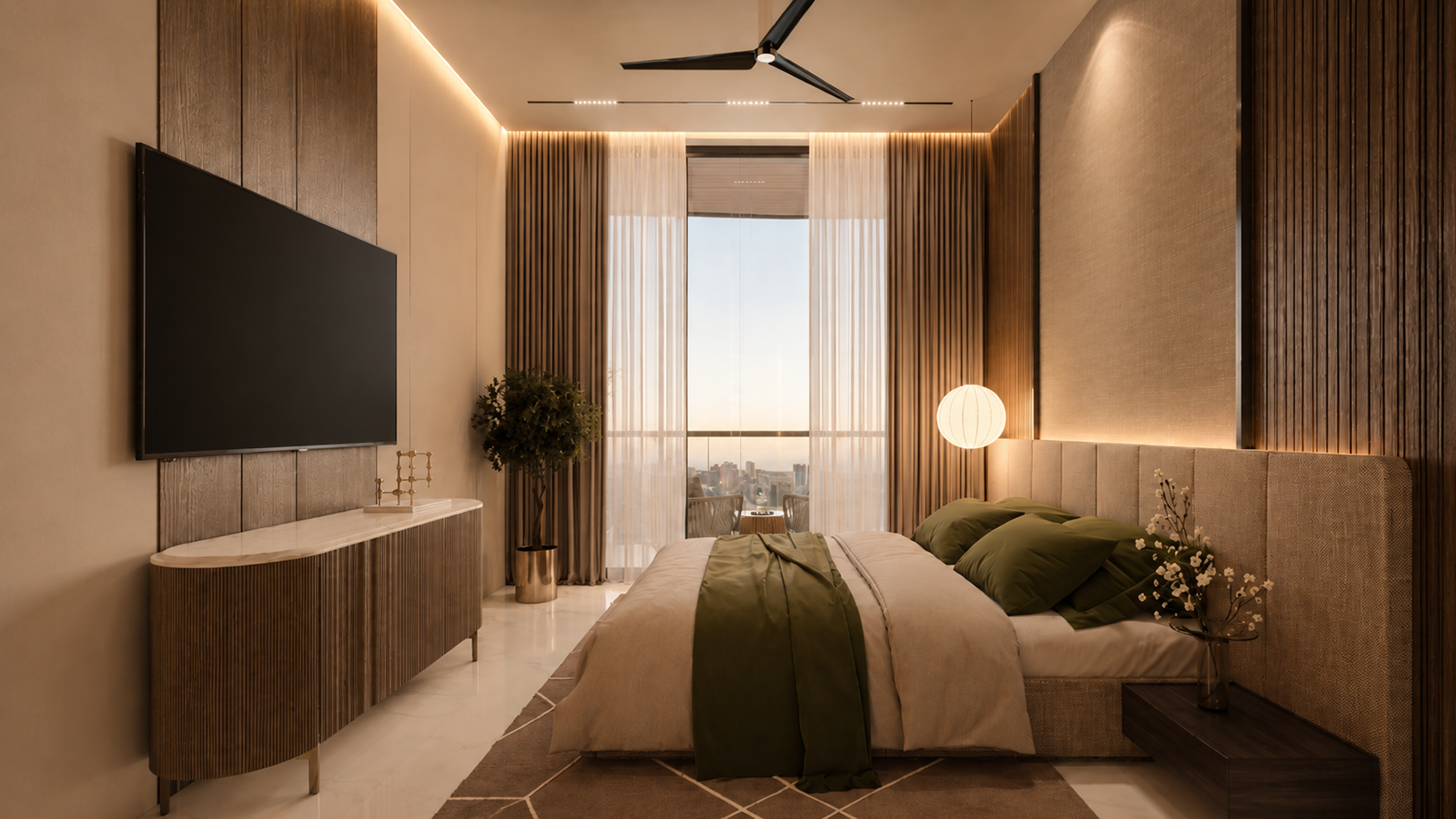
Generative AI can create stunning visuals — but it can also make serious errors.
Common mistakes include:
- Distorted buildings
- Extra floors
- Incorrect materials
- Unrealistic reflections
- Inconsistent characters or deformed faces
- Imaginary project features
In real estate, these errors can misrepresent the project and set expectations the final build can't meet.
Every AI-assisted visual should be checked against approved renders, plans, materials, and verified project details.
AI should improve how a project looks — not change its design or promise. Realism only matters when it's accurate.
AI Still Requires Creative Direction
A great prompt alone doesn't make a great campaign.
Before generating any visual, the creative team must understand the audience, positioning, marketing goal, platform, mood, and architectural limits.
For FLIP, the goal wasn't just "generate an image of a young Indian man." Siddharth needed to feel financially aware yet approachable, modern yet relatable, successful but not unrealistically wealthy. His clothing, expressions, body language, and framing were all shaped by the campaign strategy.
AI executed the visual. Human judgement and strategy made it work.
The Future of AI in Real Estate Marketing
Generative AI is shrinking the gap between a campaign idea and its final visual.
It helps teams:
- Build recognisable characters
- Explain complex master plans
- Visualise unbuilt environments
- Create project-specific lifestyle scenes
- Adapt campaigns across formats
Our work on Nature Tulsi FLIP, Padam Estate, KDMS Skywalk, New Heritage City, and Nature Rudraksh shows one thing clearly: AI delivers its best results when it supports a clear creative strategy. whether that means crafting campaign visuals or designing organic AI interfaces for luxury real estate that let buyers experience a project before it is built.
AI can generate images fast. But a successful campaign still needs an honest project promise, a relevant idea, architectural accuracy, human judgement, and consistent direction. As we map the future of real estate marketing, that blend of speed and strategy is exactly what separates memorable brands from forgettable ones.
At Nine Degree, we combine real estate strategy, AI-assisted image generation, campaign development, architectural visualisation, video production, and storytelling to create work that is distinctive, credible, and commercially effective.
AI's best use isn't just generating more content. It's helping people notice, understand, imagine, and remember a project.
Share