.png)
Picture a buyer in Jaipur. On Monday they pass a hoarding and forget it by lunch. On Tuesday they search the project name on Google. On Wednesday night they watch a walkthrough on Instagram. By Friday, they have compared three competing projects, checked the location on Maps, asked a cousin who lives nearby, and sent a WhatsApp message to the sales team. The site visit happens two weeks later, if the project has done its job in between.
That week is an illustration, but most developers will recognise it. Nobody in it saw "an advertisement". The buyer met the project several times, in several forms, and each meeting either added to their confidence or took some away.
That is real estate marketing. It begins well before the ad goes up and carries on well after the enquiry comes in.
What Is Real Estate Marketing?
Real estate marketing is promoting a property, a project or a developer to potential buyers and investors. It uses branding, advertising, content, digital channels, sales communication and lead nurturing to do it.
Put simply, it connects the right property with the right buyer through the right message and the right channel. The word "right" is where the difficulty sits, because a home is a high-consideration purchase. Buyers look at location, price, floor plans, developer reputation, construction progress, and competing projects before they agree to speak to anyone in sales. A single advertisement rarely settles any of that, so marketing has to be present at every stage of the decision.
Real Estate Marketing Meaning: More Than Advertising
Advertising answers one question, which is how to get seen. Marketing starts with harder ones. Who is this project really for? Why would they pick it over the ten others on their list? What should they remember a month from now? Where will they first come across it?
The answers set everything downstream, from the project's positioning and identity to the website, the hoardings, the Google campaigns, the brochure and the pitch the sales team makes on the floor.
This is why two projects with near-identical apartments can perform very differently. One has a sharper proposition, clearer communication, and a better idea of who it is talking to. The other has a larger media budget and a vaguer message. The first usually sells faster.
Types of Real Estate Marketing
Most developers use a mix, and the mix changes with the project, the location, and how far along sales are. The real estate marketing strategies that work for one launch rarely transfer unchanged to the next.
Traditional Marketing
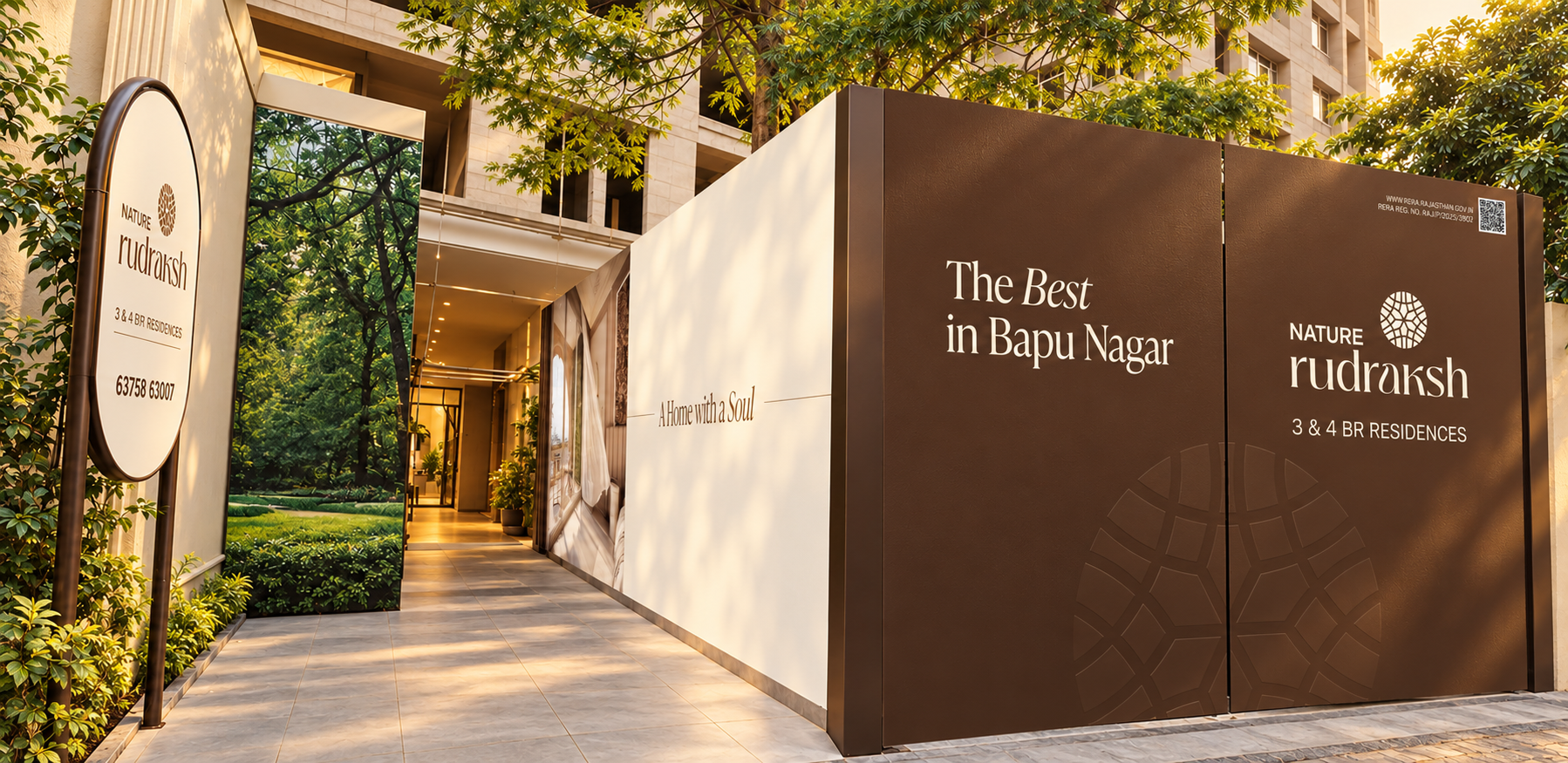
Hoardings, newspaper ads, brochures, radio, property exhibitions, site branding, and channel partner campaigns still matter, especially for projects tied to a particular locality. A hoarding on a busy corridor makes a project familiar to thousands of people who pass it daily, and that familiarity tends to pay off later when the same people see the project online.
Digital Marketing
Digital covers SEO, Google Ads, Meta ads, YouTube, social media, websites, landing pages, property portals, email, WhatsApp, retargeting, and CRM automation. Its strength is that it can reach buyers at different points in their research. Someone searching "3 BHK flats in Jaipur" already has an intent. Someone watching a villa film on Instagram may only be discovering the category. Both can end up buying, but they need different things said to them.
Developer Brand Marketing
Developers with more than one project are also selling themselves. Positioning, identity, corporate campaigns, content, and reputation all build a name that carries from one launch to the next. A well-known developer hands every new project a head start, because buyers arrive already familiar with it.
Project Marketing
This is the type closest to sales, and it deserves a closer look.
What Is Project Marketing in Real Estate?
Project marketing is the work of creating demand for one specific development and moving buyers towards a booking. It typically runs from market research and buyer profiling to positioning, project branding, launch, advertising, lead generation, nurturing, site visits, and bookings.
How it plays out depends on what the buyer cares about. A new residential project in Jaipur whose biggest advantage is location might build its campaign around connectivity and daily convenience. A luxury development has to talk about architecture, privacy, specifications, and what living there feels like. A plotted development in an emerging corridor has a different job, which is to explain the infrastructure and the growth ahead so that the plot makes sense as an investment.
The project is the same in each case. The marketing changes because the buyer changes.
Real Estate Marketing Channels
Each channel is a different door into the project, and each one does a different job.
Google Search catches buyers who are already looking.
Instagram and Facebook introduce the project visually and keep it in front of people who showed interest.
YouTube suits property well, since a video can show architecture, amenities, and location better than any specification sheet.
SEO puts a developer in front of people searching for localities, projects and property questions. Property portals reach buyers who are comparing inventory side by side.
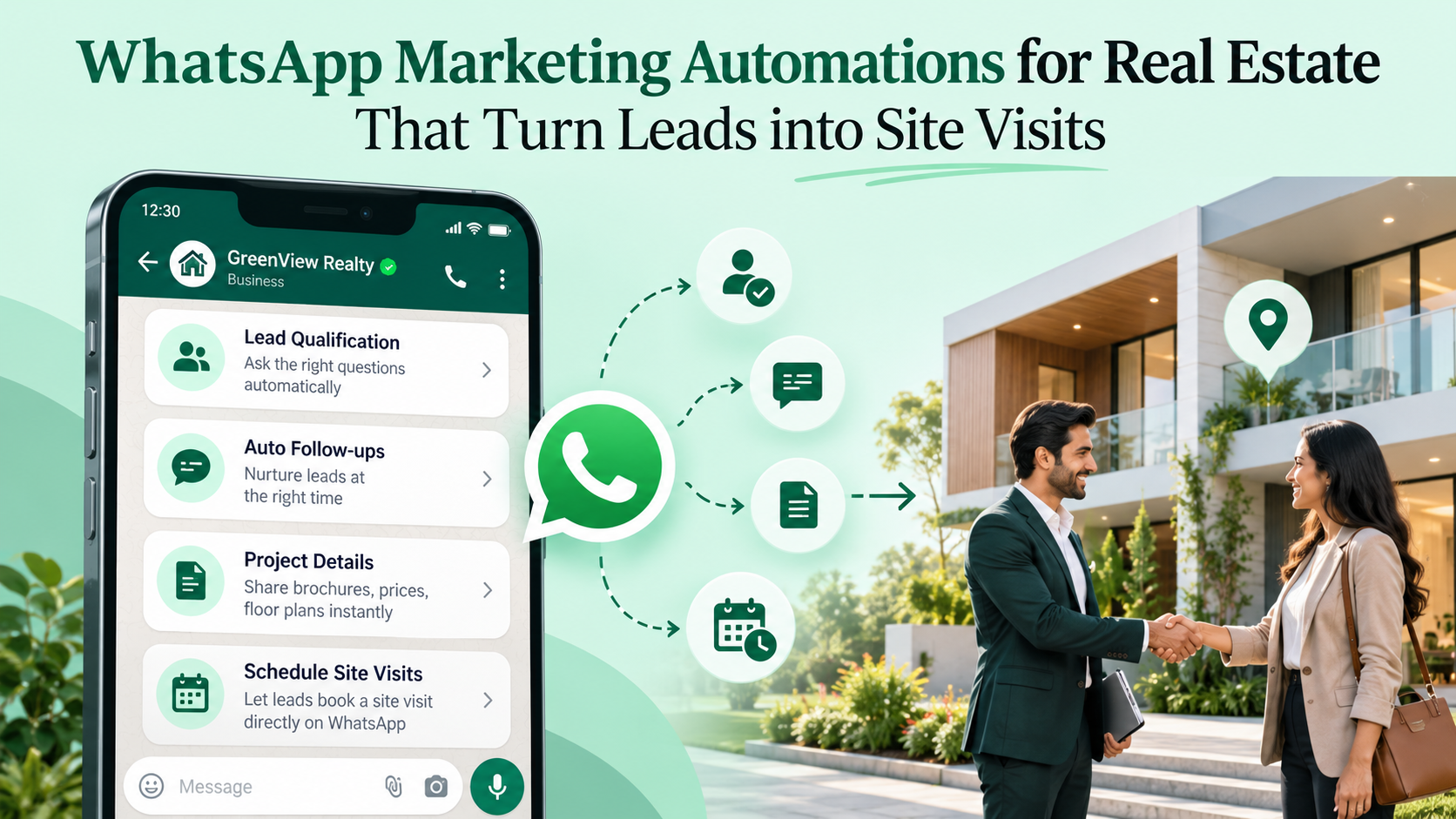
WhatsApp handles enquiries, brochure sharing, reminders and follow-ups.
Outdoor advertising gives the project a physical presence in the neighbourhoods where its buyers live and travel.
Channel partners, meaning the local brokers and property consultants, add a human voice that often carries more weight than any ad.
The strongest campaigns rarely lean on a single channel. They make several work together, so that a buyer who sees the hoarding, then the Google result, then the WhatsApp message gets the same story each time.
What Makes Real Estate Marketing Techniques Work
The best techniques are seldom the flashiest.
It begins with the buyer. A villa buyer and a first-time apartment buyer have different motives, different objections, and different timelines, and a campaign that speaks to both in the same breath usually convinces neither.
Next comes the project's real reason to be considered. "Premium amenities" no longer separates one project from another, and "strategic location" says nothing until the marketing explains what the location actually makes easier. A good proposition hands the buyer one specific thing to remember.
After that, every touchpoint has to carry the same idea. The ad, website, brochure, film, sales presentation and WhatsApp reply should read as parts of one story.
The last piece is measurement after the lead comes in. A campaign that brings in 1,000 enquiries sounds impressive until only 20 of them visit the site. The numbers worth tracking are cost per qualified lead, lead-to-site-visit rate, cost per site visit, site-visit-to-booking rate, cost per booking, and the revenue the marketing spend eventually produced. The cheapest lead is rarely the best one.
Why Digital Marketing Matters in Real Estate
Buyers now do most of their research before they speak to a salesperson. They find a project on Instagram, look up the developer on Google, compare competitors, read the website, watch the walkthrough, check the location, and come back days later because a retargeting ad reminded them.
Good real estate digital marketing lets a developer be present at each of those moments. It also makes the process measurable. A developer can see which campaigns bring enquiries, which audiences respond, where prospects drop off, and which sources end up producing site visits and bookings. In a category with long sales cycles, where every qualified prospect counts, that visibility is a real advantage.
How Real Estate Marketing Works in India
There is no single Indian formula. The market shifts sharply from city to city, from one neighbourhood to the next and between price segments. A luxury apartment in Mumbai needs a different approach from an affordable housing project in Jaipur. A plotted development in an emerging corridor needs a different story from a ready-to-move flat in an established locality.
Location counts, and so do price, developer reputation, family opinion, and trust. Buyer behaviour online counts more each year. This is why good marketing begins with understanding the market and the buyer, and picks the platform afterwards.
Real Estate Marketing Terms Worth Knowing
A few terms come up in nearly every campaign conversation.
CPL is cost per lead, the amount spent to generate one enquiry.
CQL is the cost of a lead that meets defined criteria.
CTR, or click-through rate, is the share of people who click after seeing an ad.
Conversion rate is the share of users who complete the action you wanted.
Retargeting means advertising to people who have already visited your website or engaged with your brand.
A landing page is a campaign page built to produce one action, usually an enquiry.
Lead nurturing is the follow-up with prospects who are interested but not ready.
A CRM is the software that tracks leads, conversations, and sales activity.
A channel partner is a broker or property consultant helping to sell the project.
The Real Purpose of Real Estate Marketing
Good marketing makes a project visible to the right people, gives them something worth remembering, and arrives at the moment it matters.
A hoarding builds familiarity. A Google search catches intent. A social campaign creates desire. A website answers doubts. WhatsApp keeps the conversation alive, and a site visit turns interest into conviction. Each touchpoint has a job, and when those jobs connect, marketing stops being a pile of advertisements and becomes a system. It moves a buyer from "I've seen this project" to "I want to see it" and then to "I want to buy it."
At Nine Degree, we look at real estate marketing in exactly this way, with positioning, brand, creative, digital, technology, and sales working together towards business results you can measure. Attention is easy to get. The harder part is turning it into intent, intent into site visits, and site visits into sales. That is the part we like to work on with developers.
Frequently Asked Questions
What is real estate marketing?
Real estate marketing is how properties, projects, and developers are promoted to buyers and investors. It combines branding, advertising, digital channels, content, sales communication, and lead nurturing, all aimed at moving someone from first awareness to a site visit and eventually a booking. It covers the whole buying process, not just the advertisement a buyer sees at the start.
What are the types of real estate marketing?
The main types are traditional marketing, digital marketing, project marketing, and developer brand marketing. Within these are content marketing, performance marketing, referral marketing, and channel partner marketing. Most developers use a mix. A new launch may lean on outdoor and digital, while an established developer may invest more in brand and reputation across projects.
What is project marketing in real estate?
Project marketing is the end-to-end work of taking one development to market. It starts with research and positioning, then moves through branding, advertising, lead generation and nurturing, and finishes with sales support and bookings. The aim is to create demand for that particular project among the buyers it is best suited to, and to keep that demand alive until they visit.
Why is digital marketing important in real estate?
Buyers research online long before they speak to sales, so digital marketing lets developers appear at each stage of that research. It captures search demand, retargets interested audiences, generates measurable leads, and keeps prospects engaged through WhatsApp and email. It also shows which campaigns lead to site visits and bookings, which helps developers decide where to spend next.
What are the main real estate marketing channels?
The main channels are Google, Meta, YouTube, SEO, property portals, websites, WhatsApp, email, outdoor advertising, print, events, and channel partners. Each one reaches buyers at a different moment, from first awareness to final decision. The best campaigns combine several of them around one clear message, so a buyer meets the same idea wherever they come across the project.
Share