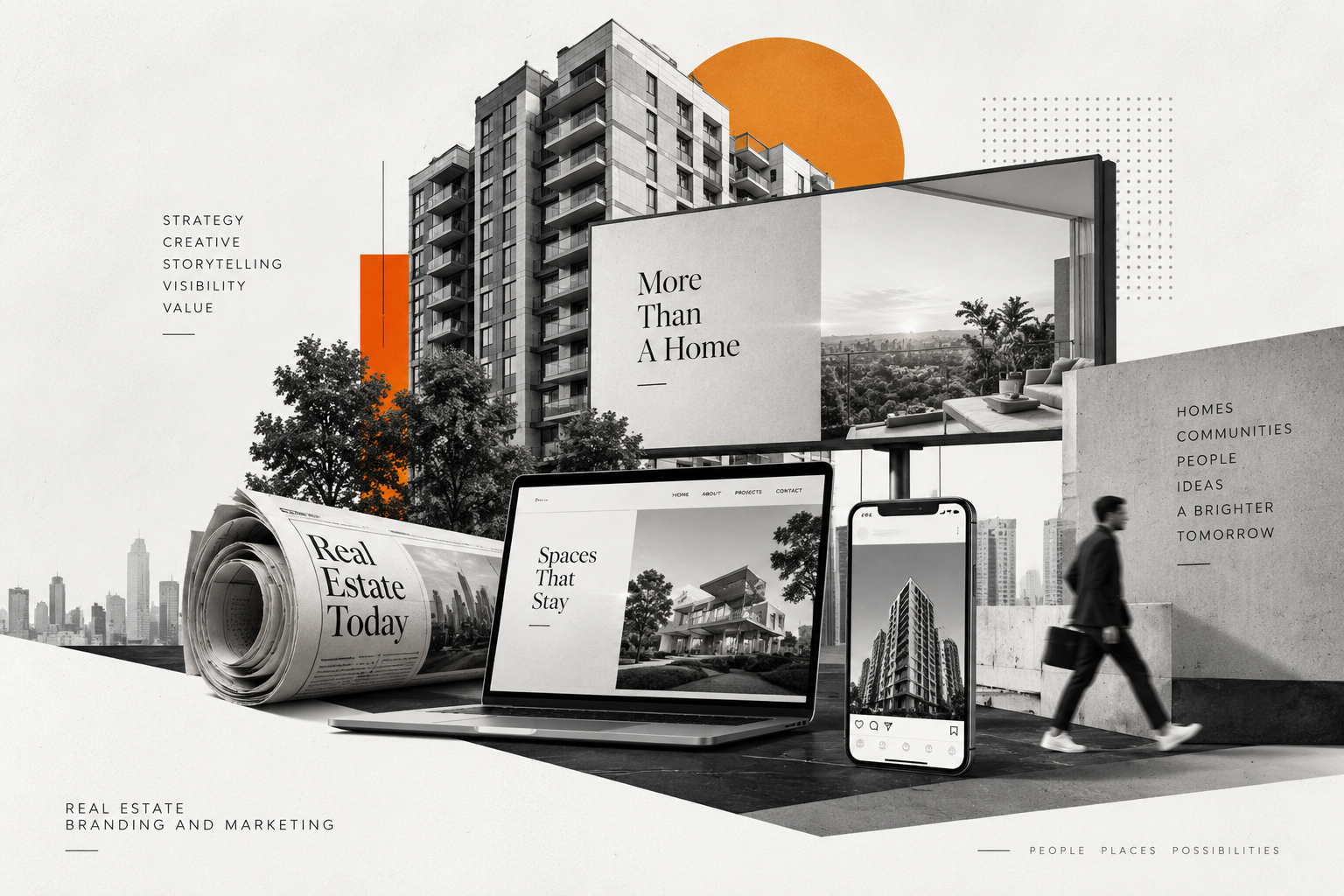
Everyone in real estate says location is everything. What they rarely explain is what kind of bet you are actually making when you choose one.
Because buyers today are not just choosing a place. They are placing a wager on how a city expands, how infrastructure evolves, and how perception shifts over the next decade. In plotted development, that wager becomes even more pronounced. What you are buying is not the present. It is a version of the future that you either believe in or walk away from.
You are offering land with a clear sense of what it becomes over time.
What is plotted development, really?
Plotted development is often reduced to land parcels, pricing, and layout plans. But that is not what drives decisions.
When you work on plotted projects long enough, you realise something quickly. Buyers do not struggle to understand the product. They struggle to trust the place. Today, it is empty land and early infrastructure. Tomorrow, it is a livable ecosystem. In the future, it is appreciation, density, and desirability.
The job, then, is not to sell what exists. It is to make the future feel real enough to act on today.
Why location is the core driver: The Padam Estate lens
Location in plotted development is not static. It is layered, and each layer either builds or erodes buyer confidence. Working on Padam Estate in South Jaipur made this visible in practice.
1. Macro development: policy as a foundation
When a city authority drafts a master development plan, it sets the direction for how the city will grow.
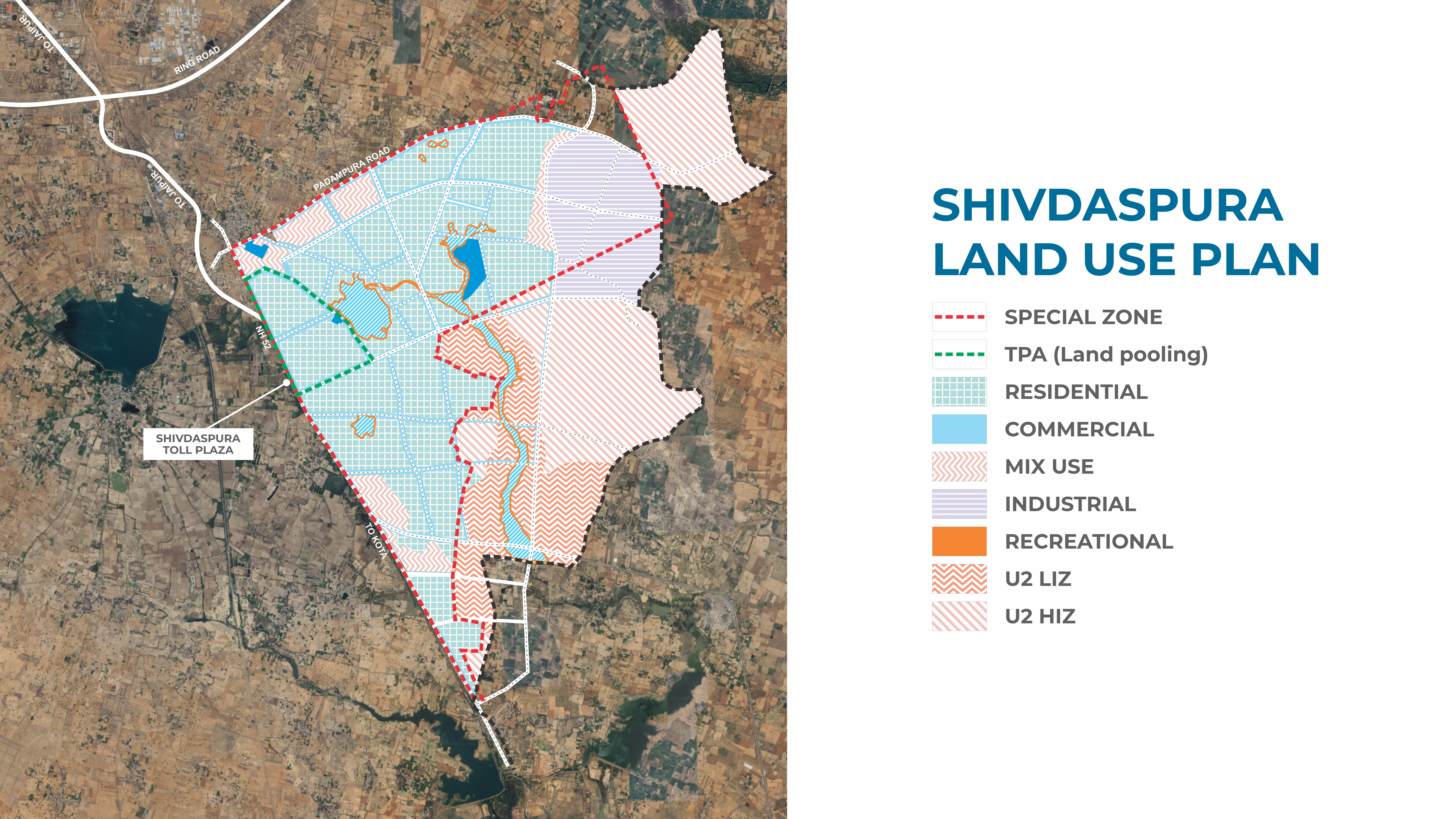
The Jaipur Master Development Plan 2025 clearly identifies expansion corridors towards the south and east. Infrastructure investments are aligned to support this movement.
When a master plan is officially adopted, three things happen simultaneously.
- Government budgets begin flowing into designated corridors.
- Private developers begin acquiring land in these zones
- Institutional confidence strengthens as direction becomes official
For buyers, this means the location is not a speculative bet on a developer's vision. It is a bet on government-backed urban policy.
The trigger, however, is not the plan itself. It is the visible infrastructure that follows. When buyers see roads being built, utilities being laid, and connectivity improving in a specific direction, they read it as institutional validation.
This is where many outer-area projects fail in their marketing. They talk about a location's potential without connecting it to the policy framework that makes that potential real. Infrastructure follows policy, and property values follow infrastructure. The sequence matters, and the narrative should reflect it.
2. Outskirts as opportunity: reframing the distance objection
Every plotted project on the outskirts faces the same first reaction: it is too far. Working on Padam Estate, located near Shivdaspura, this came up consistently. But here is what became clear over time. The objection was never really about distance. It was about imagination.
So instead of defending the location, we reframed it. We positioned Padam Estate not as an isolated site but as part of a directional shift. We called it the South Jaipur Extension. We anchored it five minutes from the Ring Road. We connected it to a broader urban pattern that buyers could recognise and understand.
We also used a pattern that buyers intuitively grasp. Delhi expands towards South Delhi. Mumbai builds value in South Bombay. Dubai pushes growth into South Dubai. The intent was not to compare cities literally. It was to establish a logic: cities expand in directions, and early entry into those directions creates an advantage. Once buyers understand the pattern, they stop debating the distance and start evaluating the timing.
3. Turning the familiar into a vision of the future
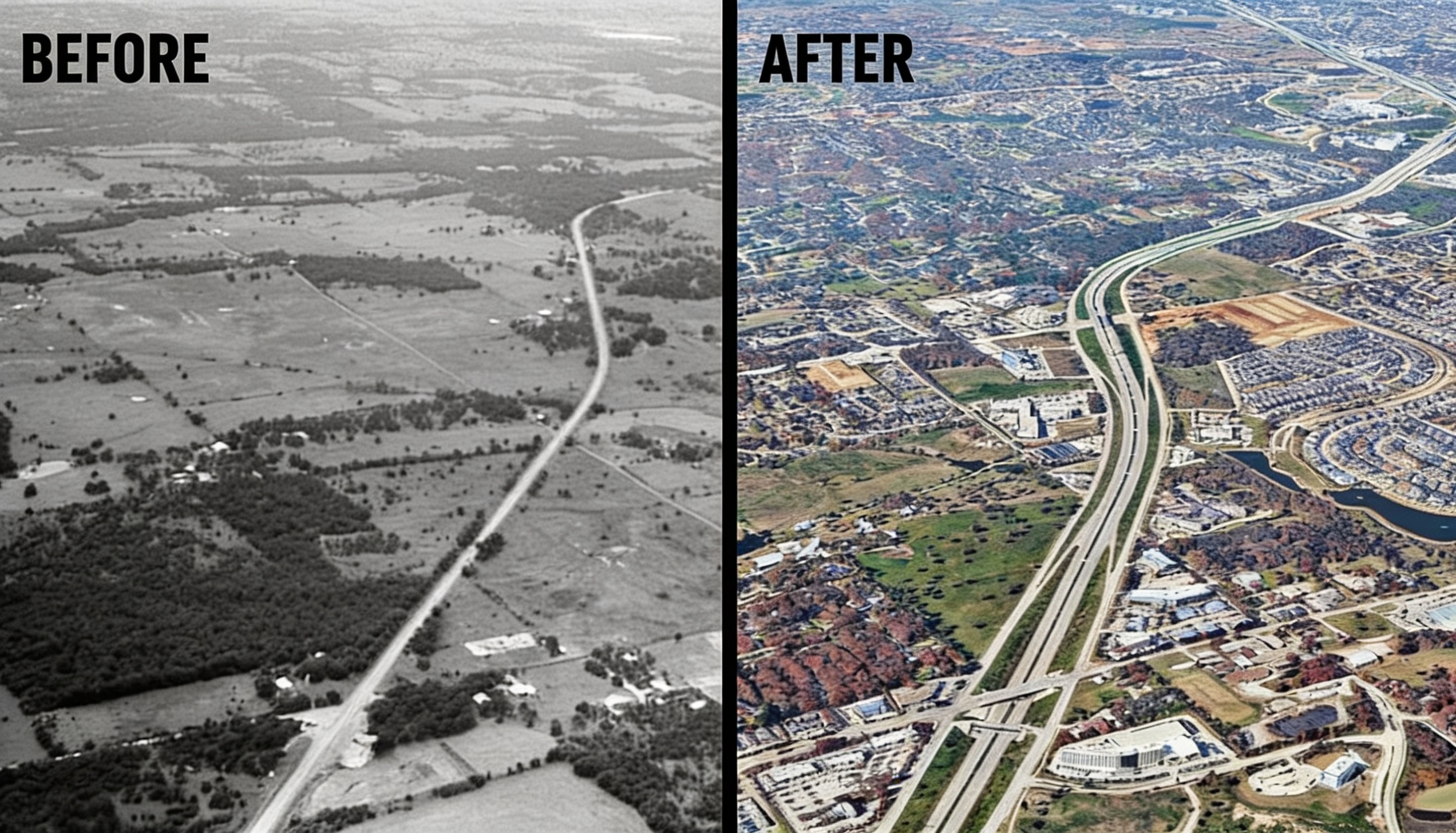
One of the most effective shifts came from using Jagatpura as a reference point. Jagatpura today is a fully active residential and commercial hub in Jaipur. But not too long ago, it carried the same hesitation that buyers were projecting onto Shivdaspura. Sparse. Distant. Uncertain.
We leaned into that memory. We framed Shivdaspura as what Jagatpura looked like a decade or two ago. Today, Jagatpura is too expensive to afford. That framing did two things. It reduced uncertainty by giving buyers a relatable precedent they had personally witnessed. It anchored an unfamiliar future in something already proven. This was not storytelling for effect. It was storytelling to make an uncertain future feel as if it had already been witnessed.
4. Infrastructure and connectivity as reinforcement
Once the directional narrative was established, connectivity served as the reinforcement layer. We did not just talk about distance in minutes. We mapped quick access to the Ring Road, linkages to Jaipur city centre, and corridors connecting to Ajmer, Delhi, and Gurugram.
This mattered because perceived accessibility consistently outweighs physical distance in buyer decisions. Research by CBRE India and JLL consistently shows that infrastructure connectivity directly shapes demand patterns and price movement in emerging residential zones. Rajasthan's own highways are proving the same pattern right now, as infrastructure is turning highways into real estate goldmines. The moment a buyer can mentally trace a familiar route to a new location, the location feels closer than the map suggests.
5. Government backing as a confidence multiplier
One of the strongest positioning signals for Padam Estate was its alignment with planned development zones, where significant public investment was already flowing into surrounding infrastructure.
Instead of stating this as a fact, we translated it into meaning. If the government is committing capital to this area, the direction is validated. Buyers do not always trust developers, but they trust visible intent when it is backed by institutional spending. That trust, once formed, becomes the foundation for a decision.
The gap between reality and perception
This is where most projects win or lose.
A location may be objectively strong. But if the buyer cannot see its future, it underperforms. Conversely, a location with modest fundamentals can punch above its weight if its trajectory is clearly and credibly articulated. Real estate sits at the intersection of geography and psychology, and psychology is shaped by what buyers have witnessed before, what they are being told now, and what they are willing to believe about what comes next. Reading that psychology is the core of decoding the Indian real estate buyer.
Strong locations struggle when they are not framed correctly. Average locations outperform when they are positioned with precision. The product alone does not determine outcomes. The interpretation of the location does.
What this means in practice
The marketer's perspective
The location does not sell itself. It needs interpretation. The job is not to convince someone that a location is good today. The job is to help them understand why it will matter tomorrow.
In practice, this requires anchoring the location in a larger, credible growth direction. It requires using real, local precedents to explain future potential, not abstract projections. It requires connecting infrastructure signals to everyday relevance so buyers can feel the proximity rather than just read about it. And it requires staying consistent in that narrative across every touchpoint, because belief is built through repetition, not a single well-crafted pitch.
The moment a buyer understands the direction, distance stops being the objection. That is why plotted project marketing in Jaipur has to be planned corridor by corridor. Shivdaspura, Ajmer Road and Sirsi Road are each at a different point between "too far" and "too expensive", and each needs its own story, channel mix and site-visit plan.
The developer's perspective
From a developer's lens, outer locations are rarely accidental. They are strategic. Land aggregation happens early, before price escalation. Entry into emerging corridors allows lower acquisition costs, larger land banks, and meaningfully higher long-term upside.
The trade-off is timing. You are ahead of the market, which means the gap between where the location is and where it is going has to be bridged by marketing, by on-ground experience, and by the visible credibility of early infrastructure. Internal development quality, launch sequencing, and site experience all become tools to accelerate belief when the location itself cannot yet do it alone - the same logic behind how construction quality and detailing shape long-term value in apartments.
What looks like far today is often just early. The buyers who understand that are not buying land. They are buying time.
Conclusion
In plotted development, what you are evaluating is never just where the land sits today. It is where the city is moving tomorrow. The strategic question is not whether the location is good. It is whether you can see its direction clearly enough to act before the market does.
At Nine Degree, this is exactly the work we do. We read the city before we position the project. We translate master plans into narratives people understand. We use familiar references to build future confidence. We align messaging with real infrastructure signals and hold that message consistently until belief is formed.
Because what looks like a market movement is usually a mindset shift. And the real question is never what you are buying. It is whether you understand where you are buying into.
Share