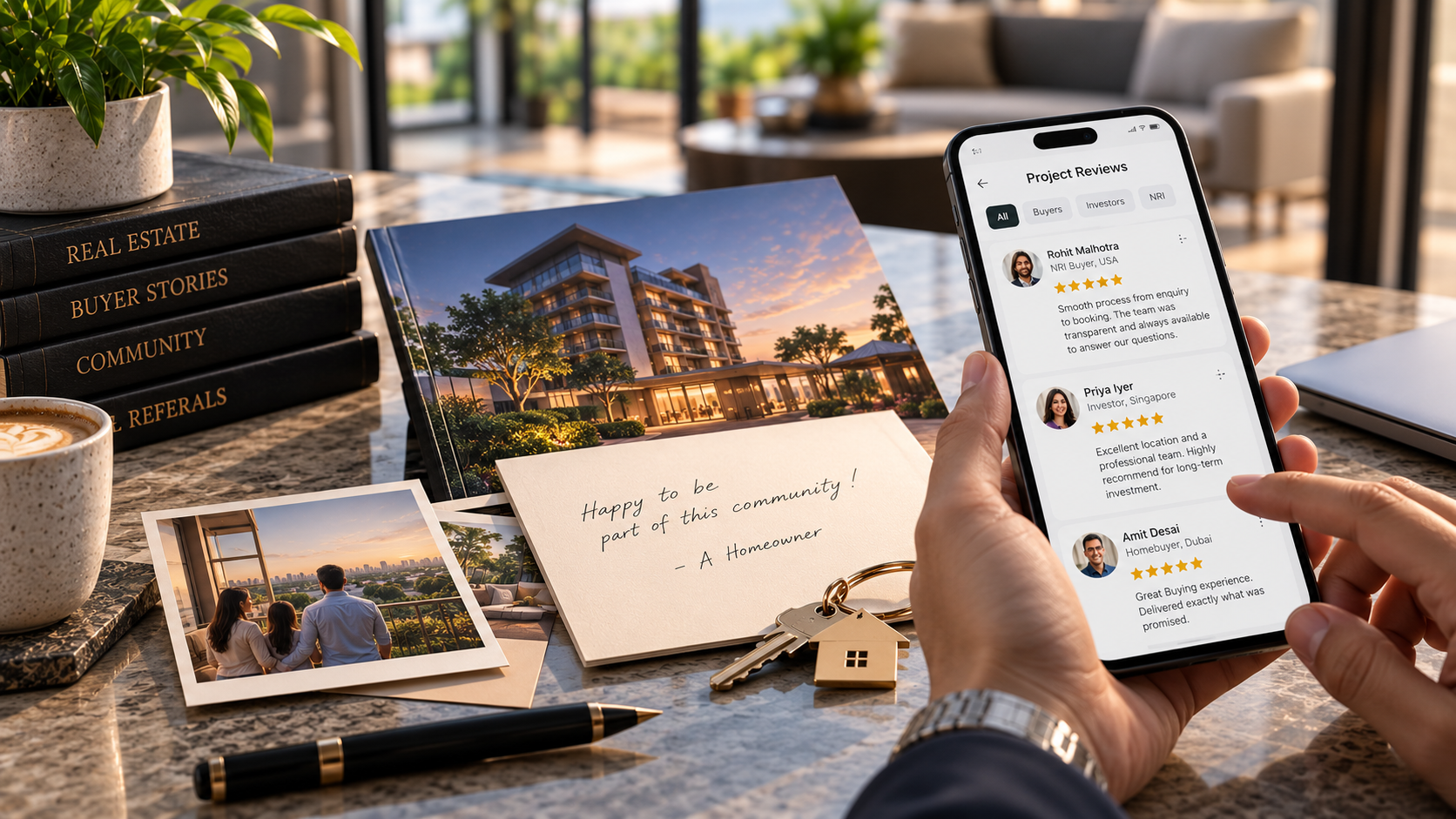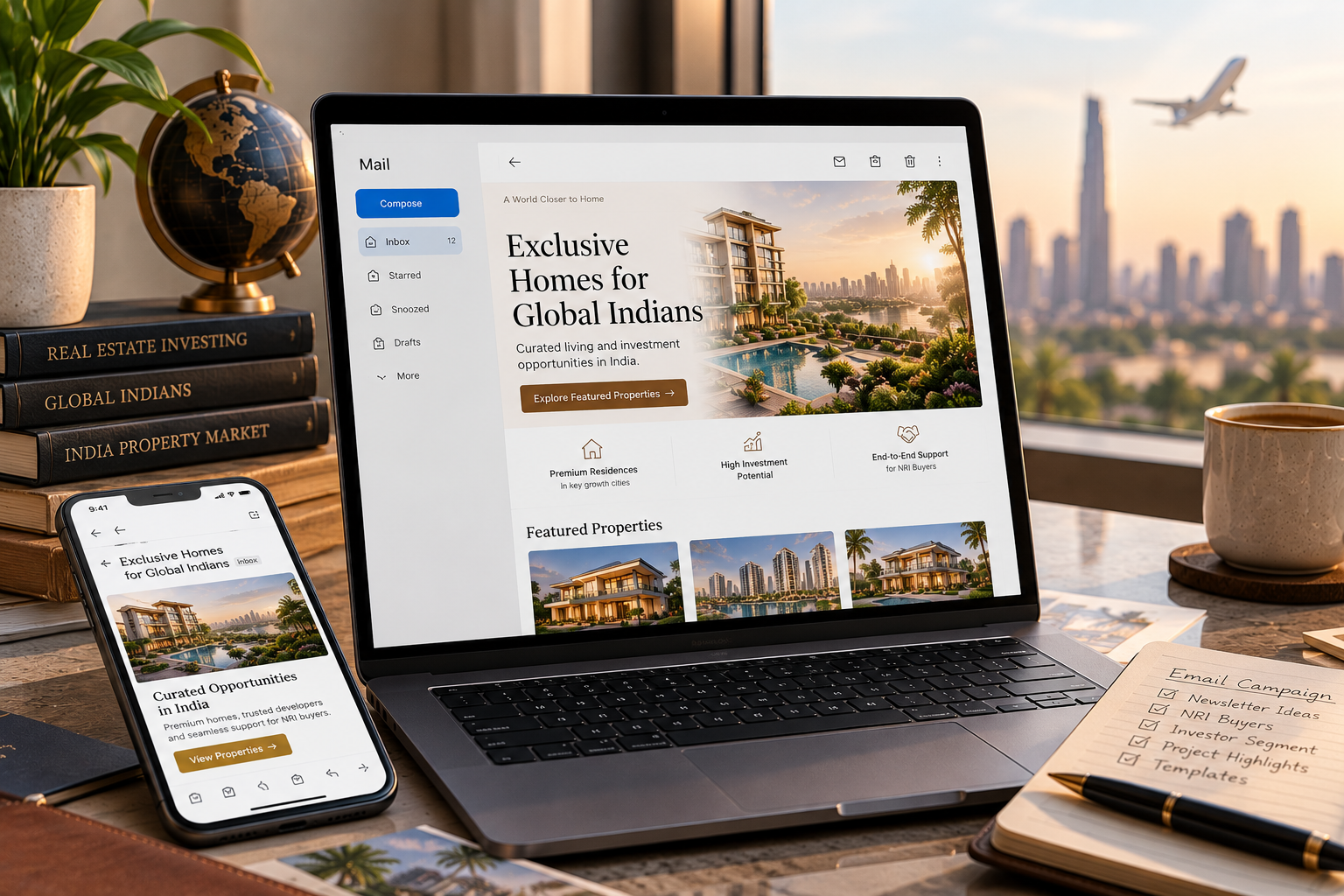
The Tab That Stayed Open for Eleven Days
Picture a software architect in Dubai. We will call him Rohit, a made-up name for a very real buyer type. He has had a Jaipur project brochure open in a browser tab for eleven days. He has not called, not filled a form, not answered your agent’s two WhatsApp messages. He has, however, forwarded the PDF to his brother in Pune, asked his wife which floor she would want, and checked the dirham-rupee rate four times.
Your CRM calls him a cold lead. He is a buyer moving in slow motion, and the channel built for slow motion is the email inbox.
That is the real case for email marketing for real estate agents. WhatsApp is where you chase a buyer. Email is where a buyer keeps you safe, searchable, and forwardable, waiting for the night the family finally sits down to decide.
The audience is also getting bigger. Industry estimates put the NRI share of Indian property purchases at 7 to 10 per cent in 2015 to 2018 and close to twenty per cent by 2025. DLF reported NRI buyers at 23 per cent of its FY24 sales, up from 5 per cent in FY22. Remittances to India hit a record $135.46 billion in FY25, according to RBI data. That money is looking for an address.
Does Email Even Work in India? A Slightly Awkward Answer
Open rates are modest. GetResponse’s 2024 benchmarks, as reported by marketing platforms, put India at roughly a quarter of emails opened, with an unusually healthy click rate. WhatsApp gets seen faster, no argument.
But a flat purchase is not a flash sale. A WhatsApp message is read in five minutes and buried in five days. A well-labelled email gets starred, and gets hunted down in month three when someone asks, “Which developer explained the registry timeline so clearly?”
Email does not need to win the open-rate contest. It needs to win the second read.
Three Inboxes, Three Different Emails
Most real estate emails to clients fail because they are written for an imaginary average buyer who does not exist.
The Gulf-based NRI usually has a return-to-India plan sitting somewhere in his head. He wants possession dates, a reliable property manager, and to know who will physically stand at the site on his behalf. The NRI in the US or UK worries about paperwork: powers of attorney, which documents can be signed remotely, and how money moves back out. The domestic investor is the easiest reader and the least sentimental. He wants ticket size, holding period, and what resale looks like in that micro-market, without anyone promising him returns.
One fact deserves a line in your emails to NRIs. Under FEMA, they can generally buy residential and commercial property, but not agricultural land, plantation property, or farmhouses. Have your CA confirm the current position, then say it plainly. A single clear sentence removes a doubt before it turns into a reason to wait.
What a Real Estate Email Newsletter Should Actually Carry
A real estate email newsletter is not a brochure on a schedule. Each issue needs one thing the reader can verify, one thing they did not know, and one way to reply in a single line.
Sign it with a human name. Write the way the person who will hand over the keys would write. Cut the hero banner, the stock skyline, and the “Dear Valued Customer.” Put the project’s RERA registration number in the footer, where it increases your credibility.
Nine Real Estate Agent Newsletter Ideas That Survive the Delete Button
- A registry diary. Walk through one completed purchase, anonymised and with permission, from token amount to registration, including the week it got delayed and why.
- A site visit by proxy. Dated photos or a two-minute phone video of the plot or tower, with the construction stage named in plain words. NRIs buy on proof that something is physically happening.
- The neighbourhood note. A school that opened, a road that widened, a café that finally arrived. Local texture no search result gives them.
- The currency page. When the rupee moves, show what a given ticket size now costs in dirhams, pounds, or dollars. A calculation, never a prediction.
- One awkward buyer question, answered in public. What happens if the project is late? Answering it builds more trust than avoiding it.
- A forwardable one-pager, written for the spouse or parent who has seen nothing so far and will read only the first screen.
- An honest comparison. Plot against apartment, or one micro-market against another, including the line where the competitor wins.
- A short profile of the site engineer or property manager who will be present when the owner is not.
- The flight-calendar email. Many NRIs land in India around Diwali, winter, and wedding season. Four weeks before, send a “while you are here” invitation with a site-visit slot instead of a brochure.
Nobody on that list is shouting “Book now.” That is deliberate.
Free Real Estate Newsletter Content You Can Borrow This Week
Two skeletons, built to be adapted rather than copied.
Subject: Block C, month 14: what the site looked like on Saturday
Two lines on what changed since last month. One photo set. One paragraph on a question a buyer asked this month. Closing line: “Reply with your questions, and I will answer them in next month’s note.” RERA number in the footer.
Subject: Three micro-markets, one honest table
A short table of ticket sizes and expected possession windows. A paragraph on who each market suits. A plain line that returns are not assured. One reply prompt.
Subject lines that sound like a person outperform ones that sound like a campaign. Test that on your own list rather than taking our word for it.
Rhythm, Time Zones and the Promise You Make by Sending
Frequency is a promise, and lists forget agents who break it. Realtor monthly newsletters work because a monthly rhythm is one a small team can actually keep for a year. Move buyers who have visited or recently clicked to a fortnightly note.
Mind the clock. The UAE runs about ninety minutes behind India, the UK four to five hours, and the US coast to coast far more. Aim for an evening in the reader’s city, after work, when the family is home, and the laptop is open.
A real estate email marketing campaign around a launch or a festive visit window can run as a short sequence over three or four weeks: a one-page project summary on day zero, the paperwork walkthrough around day three, a site diary after that, a neighbourhood note, then a calendar-led invitation. Five emails, each with a different job, none of them repeating the last.
Email Is the Letter, WhatsApp Is the Doorbell
Use both, and give each its job. Email carries the document, the explanation, and the thing worth rereading. WhatsApp carries the nudge: “Sent you the Block C update, see you Saturday?” Setting that handoff up properly, with qualification questions, drip sequences and CRM triggers working as one chain, is covered in our guide to WhatsApp marketing automations for real estate that turn leads into site visits. The front end of the funnel, where those enquiries come from in the first place, is covered in our piece on how to generate real estate leads for luxury properties.
Count Replies, Not Opens
Since Apple’s Mail Privacy Protection arrived, open rates have been inflated by machine opens. Watch replies, forwards, site-visit bookings that start from an email link, and how long a silent lead takes to come back with a second enquiry.
Keep the fine print clean. Get consent, include an unsubscribe link, and treat India’s Digital Personal Data Protection Act seriously. Readers in the UK or EU may bring other data rules, so check with a lawyer. And never hint at assured returns.
Back to the Eleven-Day Tab
Rohit is still out there, and so are hundreds of buyers like him, reading everything and replying to nothing. Silence is rarely rejection. Usually it means the buyer is not yet convinced the person on the other end will still be reliable after the booking amount clears.
Email is how you answer that, one useful issue at a time. Done well, the newsletter does more than fill an inbox. It becomes the evidence file a buyer shows his family.
A real estate project has plenty to say. The craft is deciding what deserves to be remembered across months of silence. Nine Degree builds the brand story, content, and communication systems that keep NRI and investor buyers reading until they are ready to book. If you are planning a newsletter or a full email programme for your next project, book a free consultation with our team.
Frequently Asked Questions
Does email marketing work for real estate in India?
It works when expectations are right. Email will not produce a first enquiry the way Google or Meta ads do, but it keeps NRI and investor leads warm through a decision that can take months. Agents who treat it as a trust channel, with useful issues and a steady rhythm, often see old enquiries return as site visits after a festive trip or a family discussion.
What should a real estate newsletter include?
One proof, one insight and one easy reply. Proof can be a dated site update or a completed handover. Insight could be a neighbourhood change, a paperwork explanation, or a candid comparison. Add the RERA registration number, an unsubscribe link and a human sender name. Skip stock images, generic market commentary and anything resembling a return promise.
How often should you email property leads?
Monthly suits cold and long-dormant leads. Fortnightly suits buyers who have visited, clicked recently, or asked questions. During a launch or festive visit window, a short sequence over three to four weeks is reasonable. Consistency matters more than frequency, so choose a rhythm your team can hold for a year, then watch replies and unsubscribes before changing it.
How do you market Indian property to NRIs by email?
Start with the doubts they cannot settle from abroad: who is on the ground, how remote paperwork works, what the timeline looks like, how rent and maintenance are handled. Write for their time zone, share dated site proof, and make each issue easy to forward to family. Support the emails with a WhatsApp nudge and a named person to speak to.
Share