.png)
There's an old, slightly embarrassing truth about how people actually buy homes: they rarely decide because of who is standing in the advertisement. They decide because someone they trust said, "You should check this place once." It could be a friend who recently bought a home, a colleague who knows the area, or a neighbour who has actually experienced living there.
For years, real estate marketing ignored this behaviour. Brands invested heavily in celebrity endorsements, believing that a famous face could automatically create credibility. The result? Bigger hoardings, more visibility, and campaigns that looked impressive but often failed to answer the one question buyers really had: "Can I trust this place?"
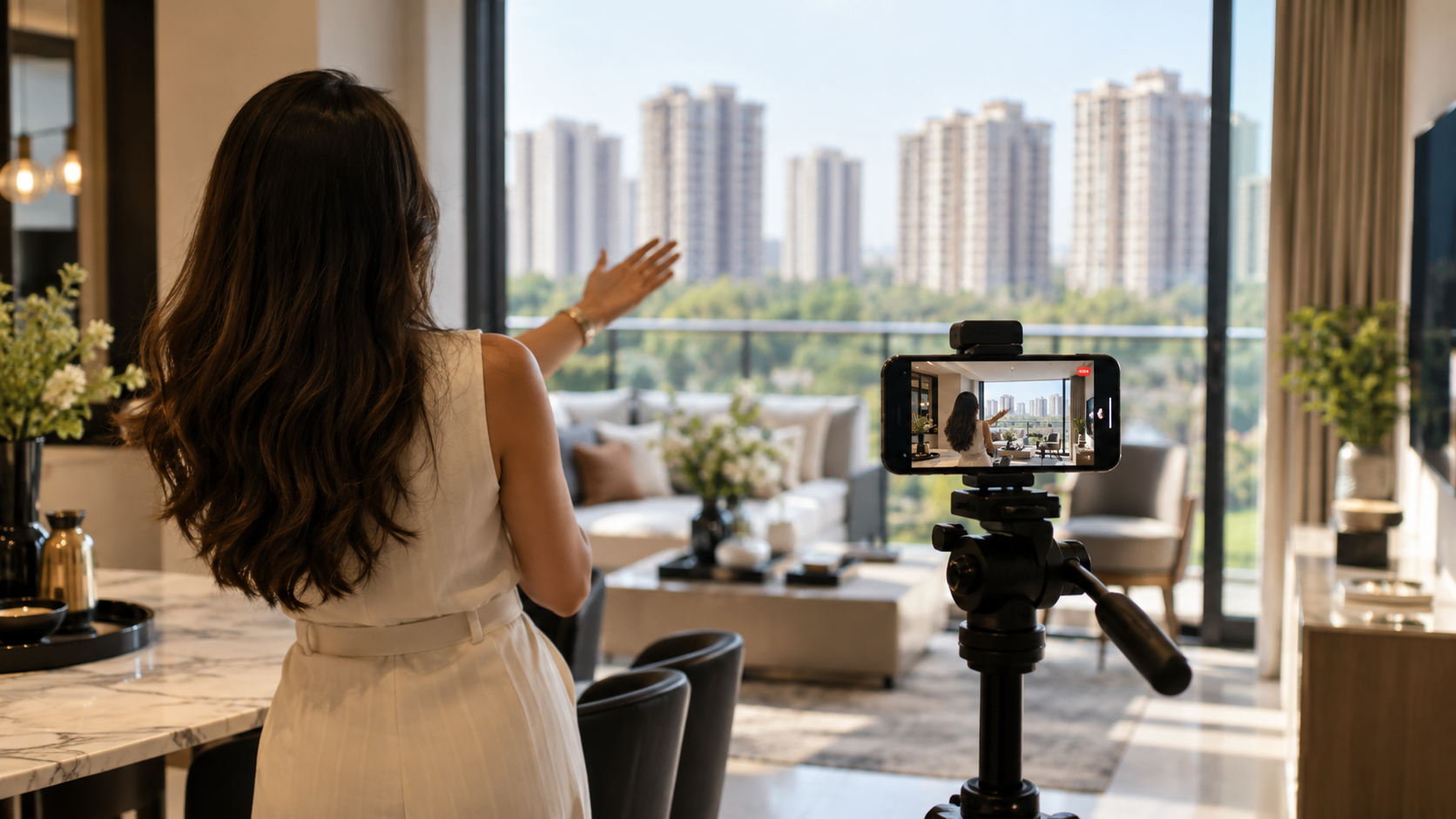
What has changed today is not how people make decisions. What has changed is where they find that trust. Instead of waiting for a personal recommendation, buyers now turn to someone online who feels surprisingly similar - a local creator who has visited the project, explored the neighbourhood, and shared their experience in a way that feels less like an advertisement and more like advice from someone you know. This is the reason why real estate brands are slowly shifting their focus from celebrities to neighborhood creators. At Nine Degree, we've seen this shift firsthand while helping real estate developers build marketing strategies that prioritize trust, local relevance, and meaningful buyer engagement over mass visibility - the same priorities that anchor our digital strategy for real estate developers.
A Famous Face Can Get Attention, But Can It Build Trust?
Celebrity marketing works well when brands need instant recognition. A familiar face creates attention and makes a campaign memorable. It helps projects stand out in a crowded market.
But buying a home is different. A celebrity can make a project look aspirational, but they usually cannot answer the questions buyers actually care about - how the connectivity holds up during peak hours, whether the neighbourhood is developing as promised, how practical the layout really is, and whether the community genuinely feels livable. These are not questions a celebrity endorsement can solve. A local creator, however, can. They are not just promoting a property; they are showing the context around it. And in real estate, context matters.
Why Buyers Listen More When Someone Feels Familiar
A home purchase is not an impulse decision. Nobody buys a house because someone famous appeared in a video. It is a long process filled with research, doubts, comparisons, and conversations. Buyers want answers beyond brochures and advertisements - how long it actually takes to reach the city, what the surrounding area is like, whether nearby facilities are genuinely accessible, and whether the project matches the lifestyle it promises.
A local creator naturally fits into this journey as understand the city. They know the neighbourhood and can speak the language of the audience. Most importantly, they feel relatable. The most credible versions of these voices are often buyers themselves - the story behind how homebuyers become real estate influencers.
A buyer may not think, "I want to buy what this influencer is promoting." But they might think: "Someone who understands this area thinks this project is worth exploring." And that small difference changes the impact completely.
Meet the New Real Estate Influencers: Local Experts
The most valuable creators for real estate are not always the ones with millions of followers. Often, they are the ones with the right audience. A Real Estate influencer with 20,000 engaged followers from Jaipur, Pune, or Bengaluru may be more valuable for a local project than someone with a million followers spread across different cities, because real estate is local and the audience needs to be relevant.
This is why brands are increasingly working with locality experts, who talk about neighbourhoods, infrastructure, connectivity, and upcoming developments; home and design creators, who explore sample flats, layouts, interiors, and practical aspects of living spaces; and life-stage creators - young professionals, couples, or families - who share experiences that potential buyers can relate to. The common factor across all of them is that they don't just showcase a property. They help buyers imagine life around it.
The Biggest Mistake Brands Make With Creator Collaborations
There is one mistake brands need to avoid: local creators cannot be treated like smaller versions of celebrities. The reason people trust them is because they feel real. If every video sounds scripted, every line feels approved, and every project suddenly becomes "the best property in the city," audiences notice. The trust disappears.
The strongest collaborations work differently. Brands give creators access. Creators ask real questions. They highlight what makes the project strong without making it feel like a sales pitch, because today's buyers are not looking for perfect advertisements. They are looking for honest perspectives. At Nine Degree, we believe successful influencer campaigns are built around authentic storytelling, local market understanding, and creator credibility not scripted promotional content.
You May Also Read: How Brand Experiences in Real Estate Can Help You Command
Why the Future of Real Estate Marketing Is Built on Trust
The shift from celebrities to creators is not about replacing branding. It is about understanding how buyers think today. A strong real estate campaign will always need a clear identity, professional communication, and a compelling vision. But before making a high-value decision, buyers are looking for something more personal - someone who can help them answer, "Can I actually see myself here?"
Because a home is not just a product people compare. It is a place they imagine their future in. And that imagination becomes stronger when it comes from someone w ho feels familiar, someone who understands the same city, the same concerns, and the same lifestyle choices.
Celebrities can create attention but local creators create connections. And in real estate, where trust is often the biggest factor behind a decision, the brands that win will not just be the ones with the loudest voices they will be the ones that feel the most believable. That believability is also a commercial lever, and it's one of the answers to how real estate developers can sell faster.
This is the approach Nine Degree follows when creating real estate marketing strategies that help developers build stronger brands, generate qualified leads, and achieve faster project sell-through.
Frequently Asked Questions
1. Why do local real estate brands prefer micro-influencers over celebrities?
Local micro-influencers deliver higher engagement and trust for neighborhood-focused campaigns. Their content resonates with local buyers because these creators feel like “friends or neighbors,” not distant celebrities. In fact, micro-influencers typically drive 3–7% engagement rates (vs. just 1–3% for celebrities) and connect with audiences in the buyer’s own community. For local projects, this means better relevance and credibility; one industry article notes that “for local campaigns, [micro-influencers] often [outperform celebrities] their audiences are geographically relevant”. In short, celebrity ads may get attention, but micro-influencers win buyers’ trust in real estate contexts.
2. How do micro-influencers build trust and engagement for real estate projects?
Micro-influencers share honest, location-specific insights (e.g. neighborhood tours, daily life in the area) that feel genuine. Audiences perceive their recommendations as authentic studies showing followers view them as friends and neighbors, not paid advertisers. This relatability drives strong engagement: one source reports “micro-influencers often achieve stronger engagement than celebrity creators,” and notes that smaller creators are seen as more trustworthy. In practice, a local influencer’s video about a new development or community feature builds organic trust that traditional celebrity spots rarely achieve.
3. What advantages do micro-influencers offer for real estate marketing?
They provide authentic storytelling and cost-effective reach. Because micro-influencers have niche, engaged audiences, their posts generate more qualified interest at a lower cost. Campaigns with micro-influencers often cost just $500–$2,500 each (versus $10K+ for celebrity deals). Their audiences are targeted (e.g. local homebuyers or renters), so engagement is higher and leads are more relevant. In practice, this means better ROI on marketing spend: one analysis notes micro-influencers deliver “affordable marketing reach” with strong engagement. They also allow developers to highlight local lifestyle and amenities, which resonates with buyers more than generic ads.
4. How can real estate brands find and collaborate with the right micro-influencers?
Focus on local creators whose audiences match your target buyers. Use influencer platforms or local directories to filter by geography, interests (e.g. home decor, community events), and engagement. Look beyond follower count: prioritize influencers with active, relevant audiences. When collaborating, give creators creative freedom provide key details (project highlights, pricing, amenities) but let them share honest experiences. Authenticity is crucial: as one expert warns, “Over-scripting kills authenticity,” so it’s better to let influencers tell the story in their own words.
5. How do real estate brands measure the impact (ROI) of micro-influencer campaigns?
You can track performance much like any digital campaign. Assign each influencer a unique tracking link or UTM-tagged URL, and use analytics/CRM tools to monitor visits, sign-ups, and leads from those links. For example, Sierra Interactive explains that you can “tag leads from specific sources, track behavior and measure conversions tied to influencer traffic.”. You can also use dedicated landing pages or trackable phone numbers for each creator. By capturing which influencer drove a lead, you can attribute sales back to the campaign. This data-driven approach turns influencer marketing into a measurable channel rather than a black box.
Share


%25201.png)