How Storytelling Shapes What Gets Built
Working on Shri Divine Vasundhara made this clear in a way no theory could. The project is built as an embodiment of the story of Radha Rani and her Ashta Sakhis, and the raas that binds them together. Just hearing that sentence does something. It pulls curiosity forward before a single brick is mentioned. What is the story, people wonder. How is it woven into the architecture? How does it turn into something they can actually walk through and feel?
That pull is what storytelling does for real estate. It concentrates attention in a way no brochure of specifications ever could. A floor plan tells a buyer what they are getting. A story tells them why it matters.
Where Need Meets Want
Buying a home is, at its most basic level, a need. It is the need to move forward, to settle, to build a base for whatever comes next. But underneath that need sits something quieter and more personal: the desire to be certain of what the home actually means.
For one buyer, it might stand as proof of conscious, intentional living. For another, it might be an aspiration finally within reach. And for someone else, it might simply be a way to connect with a version of themselves they have long imagined but never quite lived out.
No two buyers arrive at a project for identical reasons, even when they are buying the exact same unit. Storytelling is what allows a single project to speak to all of these different wants at once, without diluting itself into something generic that speaks to none of them.
Finding the Right Cue
Every story has to start somewhere, and finding the right cue determines whether it actually connects or simply sits on the page. Location, more than anything else, is the biggest influence on a real estate story. The history of a place, its culture, its character- these are not just backdrops. They are material.
In many ways, every project pays a kind of homage to the ground it sits on. A development in the Braj cannot ignore centuries of devotion woven into that land. A project in a growing tier two city cannot pretend it is being built in a metropolis with a different rhythm of life altogether. Storytelling is the mechanism through which a project acknowledges where it belongs, rather than existing as an interchangeable structure that could have been dropped anywhere.
Why This Matters More Than Ever
People connect with feelings, with memories, with things that feel human. Selling square footage and ceiling heights alone was never going to hold up against that. Buyers today are more informed, more discerning, and more surrounded by choice than at any point before. Specifications have become table stakes. What separates one project from another is no longer what it offers on paper, but what it means once someone steps inside and that meaning is exactly how brand experiences in real estate that command a premium beat the competition. This is exactly the gap modern real estate marketing needs to close.
This is where shifting the narrative through storytelling earns its place. It takes a project and turns it into something that carries value beyond its four walls, something worth knowing and, more importantly, worth connecting with.
Storytelling Beyond the Sale
What often gets missed is that the story does not end once the keys are handed over. A home built around a strong narrative continues to shape how residents experience daily life within it. Shared spaces designed around a theme, amenities named with intention, even the smaller design choices scattered through a project, all of these keep the story alive long after the transaction closes. Residents who live the narrative every day become its most credible voices - the same dynamic behind how homebuyers become real estate influencers. It becomes less about remembering what was promised in a brochure and more about living inside the idea itself, every single day.
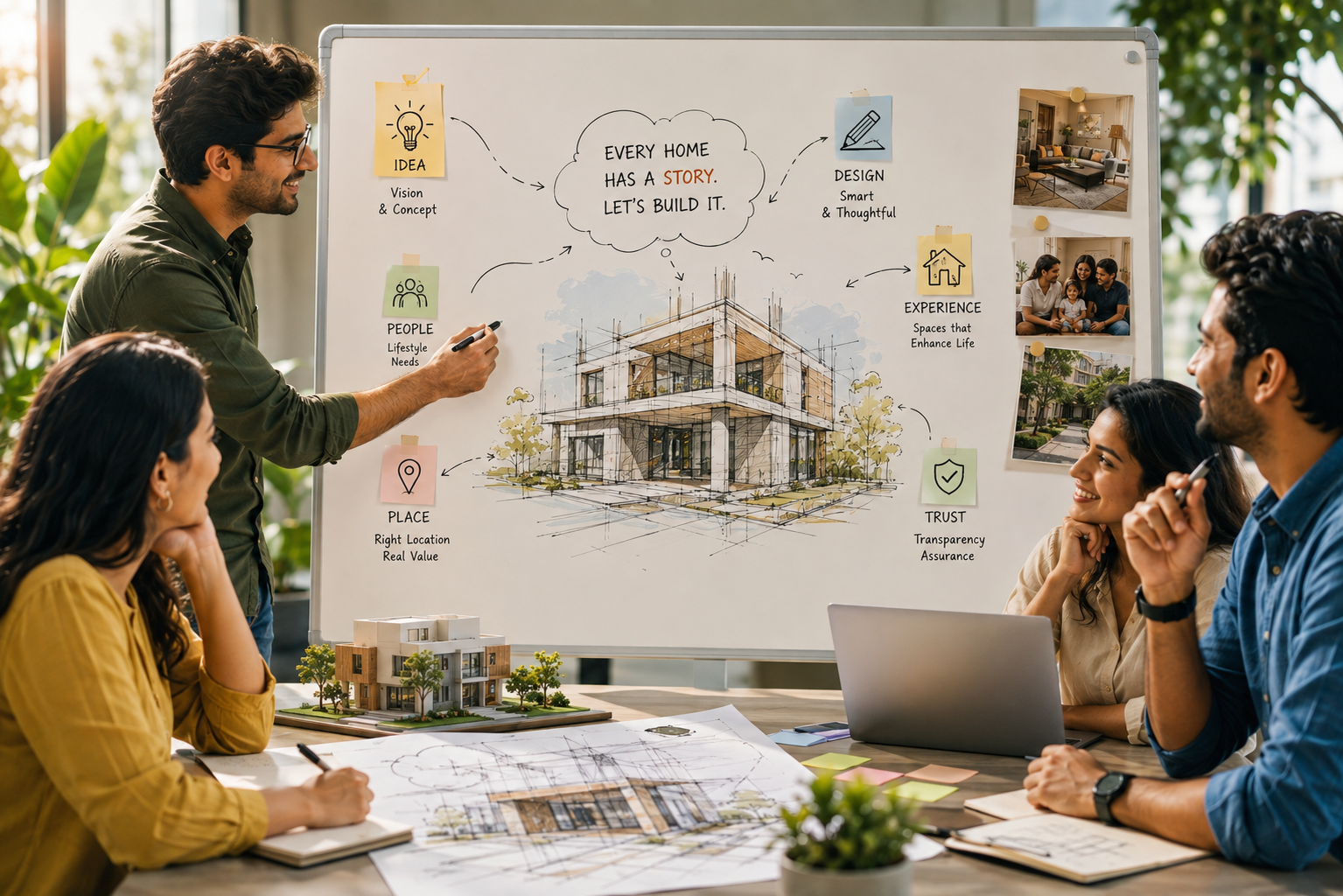
This is also why storytelling cannot be treated as a marketing exercise added on at the end. When it is built into a project from its earliest stage, it shows up consistently, in the architecture, in the amenities, in the way spaces are named and arranged. Just as strong branding helps real estate projects sell faster, a story woven in from the first sketch gives every touchpoint the same conviction. When it is bolted on later, purely for a campaign, buyers tend to sense the gap between what is said and what is actually delivered.
The Shift Ahead
Real estate as an industry is slowly waking up to what its best projects have always understood instinctively. A building is not just a structure of concrete and steel. It is a container for the lives that will unfold inside it, and the story is what gives that container its meaning before anyone has even moved in.
At Nine Degree, this is the lens we bring to every project we work with. Not storytelling as decoration, but storytelling as the foundation the rest of the project is built upon. Because in the end, people do not just buy homes. They buy into the story of who they are becoming, and a home is simply where that story gets to live.
Let’s build the Story Behind Your Brand
Frequently Asked Questions
What is real estate storytelling, and why is it important?
Real estate storytelling means shaping a property’s marketing and design around a narrative focusing on lifestyle, emotions, and identity rather than just square footage. It gives context and meaning to a home. As one marketing resource explains, real estate storytelling involves “an overarching story about the properties, places, and people”. This approach helps clients emotionally connect with a project and understand its deeper value.
How does storytelling help sell homes?
By creating emotional connections. Story-driven marketing makes clients imagine living a life in the home. Realtors note that storytelling “transforms facts into feelings” and helps buyers “picture their future in a new home”. Oakley Signs even sums it up: “Buyers don’t connect with square footage. They connect with stories”. In practice, stories about family gatherings in the kitchen or lazy weekends in the yard give meaning to features and make properties memorable.
Is storytelling only for luxury properties?
Not at all. Storytelling works for any home or development. Even copywriting experts emphasize that while luxury listings often use narrative, every home has a story if you find the right angle. As one specialist puts it, it “works equally well for family homes, investment properties, and downsizer apartments”. The key is tailoring the narrative to the audience’s dreams, whether it’s first-time buyers, growing families, or retirees.
How can location or culture be part of a project’s story?
A property’s setting is a rich source of narrative. Developers can weave local history, cultural traditions, or neighborhood highlights into the design. For example, featuring nearby parks, temples, or festivals in marketing and design “sells a sense of place, not just space”. This means the project feels authentic and grounded. A development near a historical site might incorporate heritage motifs; one in a vibrant community could highlight local art or markets. Tying the story to the location makes the project feel unique and meaningful.
What happens to the story after a home is sold?
A well-crafted story continues through residents’ daily lives. Design elements like themed amenities, custom signage, or community rituals keep the narrative alive. Experts note that effective storytelling should “inhabit the physical landscape” with branded environments – for example, a lobby installation or signage that echoes the theme creating a lasting sense of belonging. In practice, these details ensure residents constantly experience the original vision, so the story becomes part of their daily home life rather than fading with the sale.
Share